Description
Specified for large homes, farms, workshops and commercial kitchens — anywhere a smaller tank would be back on the refill schedule every month.
Specified for estates, farms, workshops and hospitality sites with a genuinely commercial gas demand.
Filled to the 80% limit this vessel holds about 800 gallons of propane — roughly 73 million BTU, or about 3,392 lb of product. Against a steady 100,000 BTU/hr load that is roughly 30 days of continuous running before it needs refilling.
Against the 500 gallon it buys real headroom; against the 1,150 it saves footprint and pad. That trade-off is usually decided by the site, not the load.
Technical details
- Rated water capacity: 1,000 gallons
- Usable propane at 80% fill: approximately 800 gallons
- Mass of propane at full fill: approximately 3,392 lb
- Heat content at full fill: approximately 73 million BTU
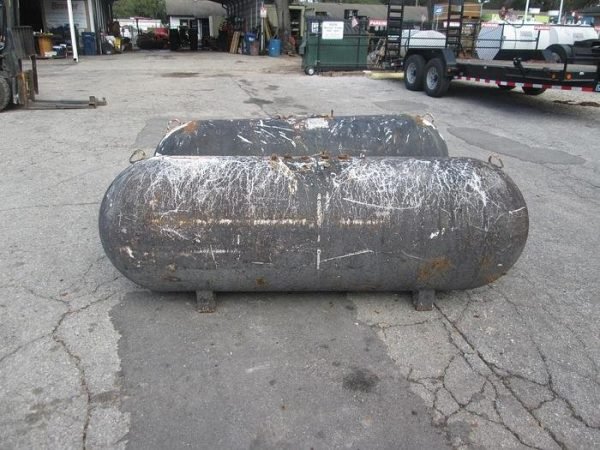
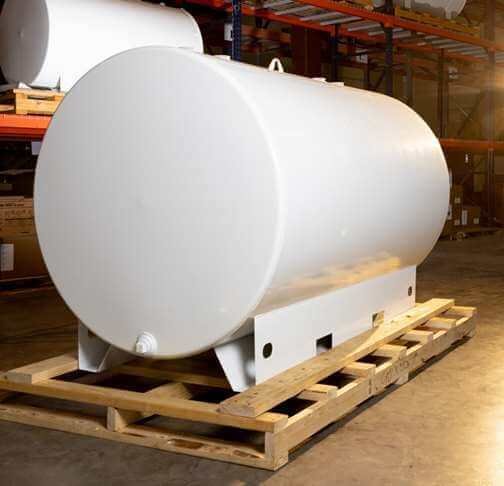
- Installation: Skid mounted
- Certification: ASME stamped
- Condition: Confirmed on your invoice
- Fuel: Propane / LPG
Getting it on site
Skid mounting makes the vessel relocatable. The tank, its saddles and the transfer fittings are built as one unit that can be craned onto a pad, a trailer or a hardstanding and moved again when the site changes.
We supply and deliver; we do not install. A propane vessel must be set and commissioned by a licensed propane professional under NFPA 58 and your local code.
What you receive
Every vessel is stamp-verified and pressure tested before dispatch, and the data plate photograph and test record travel with the invoice.
We check the relief valve, the service and fill connections and the float gauge on every unit. These are the parts that fail first and the parts that matter most.
Refills and running costs
Buying propane in summer and storing it through winter is the oldest saving in this trade, and it only works if the vessel is big enough to be worth filling.
Before you order
Size against the real load, not the optimistic one. A vessel one size too small costs more across ten years of refills than the larger one did on the day you bought it.
If you are between two capacities, go up. A tank that never drops below about 30% refills more cheaply per gallon and spends less of its life on the supplier’s emergency list.