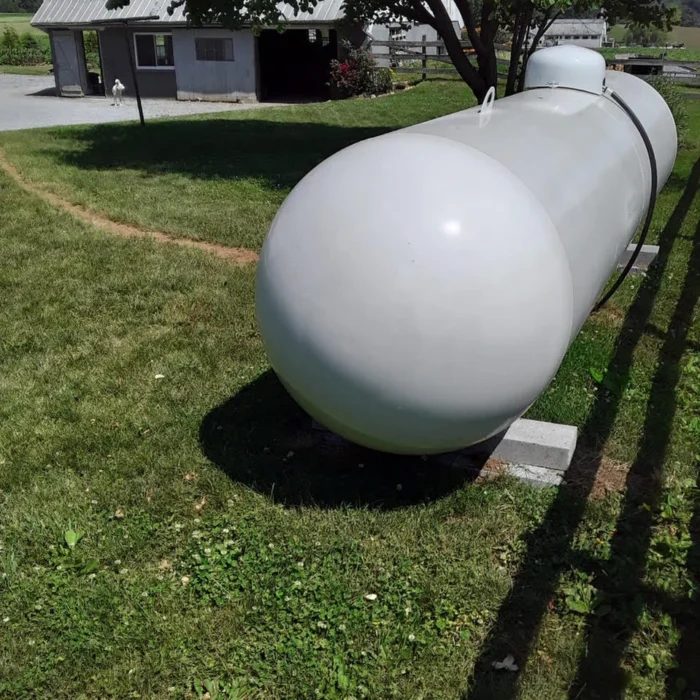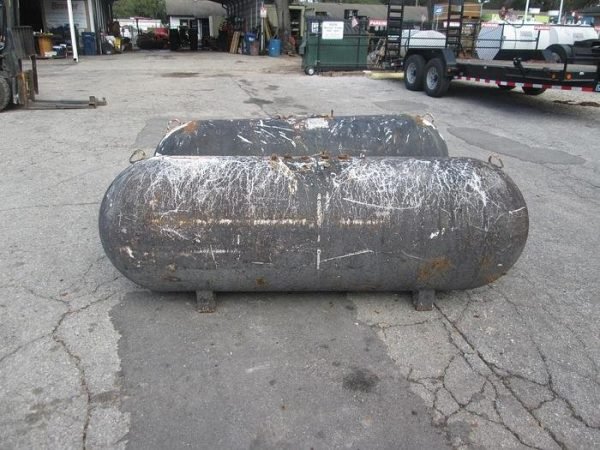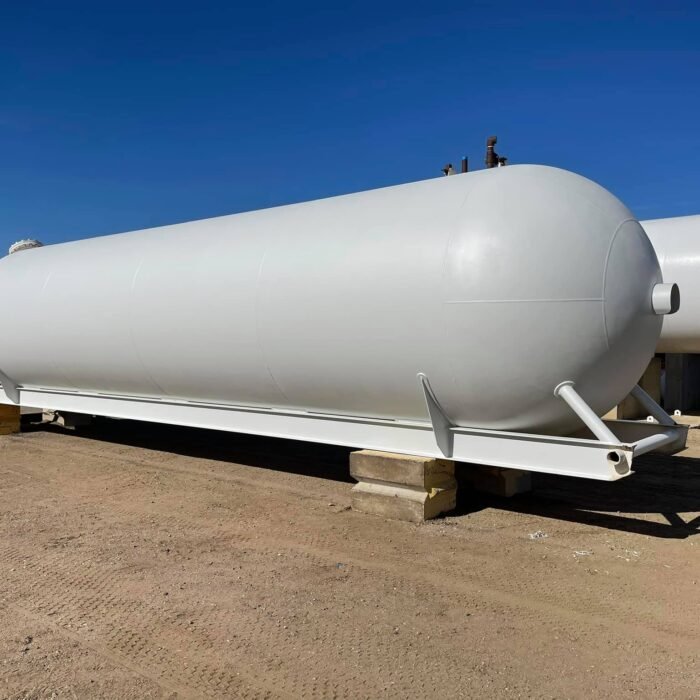
Description
Enough storage to ride out a delivery delay, compact enough to site against a boundary without a planning conversation.
Good for a compact heating system plus domestic hot water, with headroom for cooking.
Filled to the 80% limit this vessel holds about 200 gallons of propane — roughly 18 million BTU, or about 848 lb of product. Against a steady 100,000 BTU/hr load that is roughly 8 days of continuous running before it needs refilling.
Against the 200 gallon it buys real headroom; against the 320 it saves footprint and pad. That trade-off is usually decided by the site, not the load.
Specification
- Shell capacity: 250 gallons
- Usable propane at 80% fill: approximately 200 gallons
- Product weight when full: approximately 848 lb
- Heat content at full fill: approximately 18 million BTU
- Installation: Underground (buried)
- Certification: ASME stamped
- Condition: Confirmed on your invoice
- Fuel: Propane / LPG
Siting notes
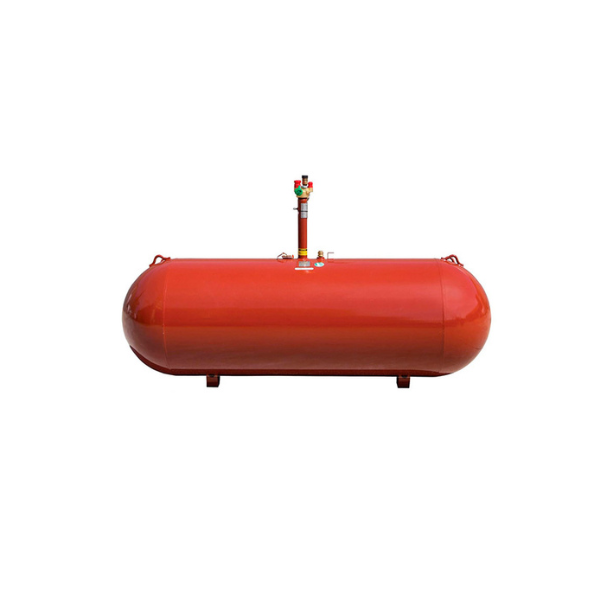
Going underground buys back the yard. The vessel is supplied coated for burial, with a riser bringing the service valves and gauge up to a dome at ground level, and a magnesium anode bag protecting the shell against soil corrosion.
Installation is a licensed trade. We will get the vessel to your site on an insured carrier; setting, connecting and commissioning it is work for a qualified propane contractor.
Condition and certification
We verify the stamp and pressure test the vessel before it leaves the yard, and the paperwork for your exact unit goes out with the order.
All connections are inspected and protected for transit, so the installing contractor starts with clean threads and a working gauge.
Cost of ownership
Larger vessels are cheaper to fill per gallon because suppliers price on delivery efficiency. A part-load top-up costs more per gallon than a bulk fill, every time.
Before you commit
Tell us the delivery ZIP when you enquire and we will quote the tank and the freight in the same reply, including any access surcharge — not after you have paid.
If you are between two capacities, go up. A tank that never drops below about 30% refills more cheaply per gallon and spends less of its life on the supplier’s emergency list.