Description
Whole-property supply in one vessel. It is the capacity that lets a household forget about propane between deliveries.
Full domestic service — space heating, water heating and every gas appliance in the property.
Filled to the 80% limit this vessel holds about 400 gallons of propane — roughly 37 million BTU, or about 1,696 lb of product. Against a steady 100,000 BTU/hr load that is roughly 15 days of continuous running before it needs refilling.
Against the 330 gallon it buys real headroom; against the 1,000 it saves footprint and pad. That trade-off is usually decided by the site, not the load.
Specifications
- Water capacity: 500 gallons
- Fillable volume: approximately 400 gallons
- Weight of propane when filled: approximately 1,696 lb
- Energy held when full: approximately 37 million BTU
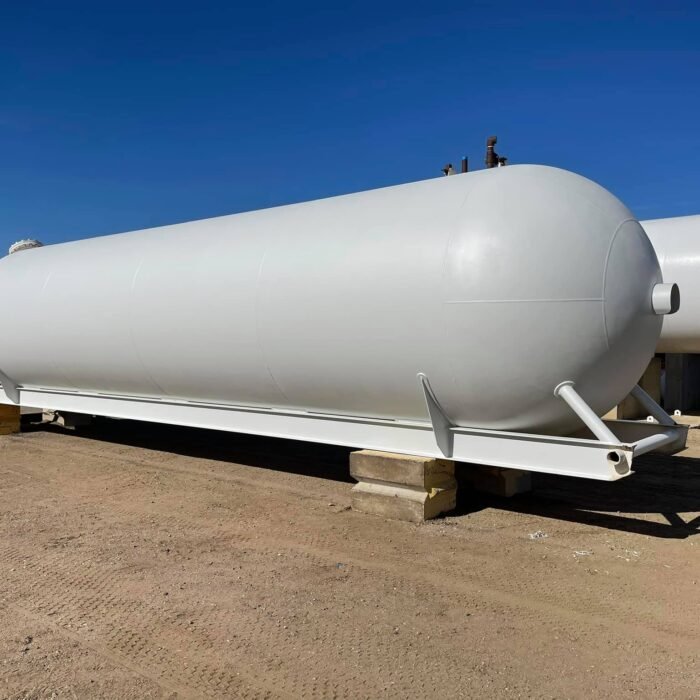
- Installation: Above ground
- Certification: ASME stamped
- Condition: Certified used — inspected and pressure tested
- Fuel: Propane / LPG
Installation and siting
The simplest installation there is: a level base, correct clearances, and the tank goes down. No excavation, no cathodic protection, and any future work happens in daylight rather than in a hole.
Setting and commissioning must be done by a licensed propane professional in line with NFPA 58 and local code. Ask us if you need a name in your area.
Condition and documentation
Sold as inspected and pressure tested. A used vessel is the same steel as a new one with a documented history attached, and the documentation is the reason to buy it with confidence. Expect honest cosmetic wear.
The gauge and the relief valve get particular attention — an unreadable gauge causes bad decisions and a tired relief valve causes worse ones.
Refills and running costs
The economics of propane are mostly delivery economics. Storage that lets you take a full load when prices are low pays for itself faster than most owners expect.
Worth knowing before you buy
Order ahead of the season if you can. Everyone specifies propane storage in the first cold week, and that is the worst week to be waiting on freight.
Check your local clearances before ordering. Setback distances from buildings, boundaries and ignition sources are set by code and they decide where — and sometimes whether — a given capacity can go.