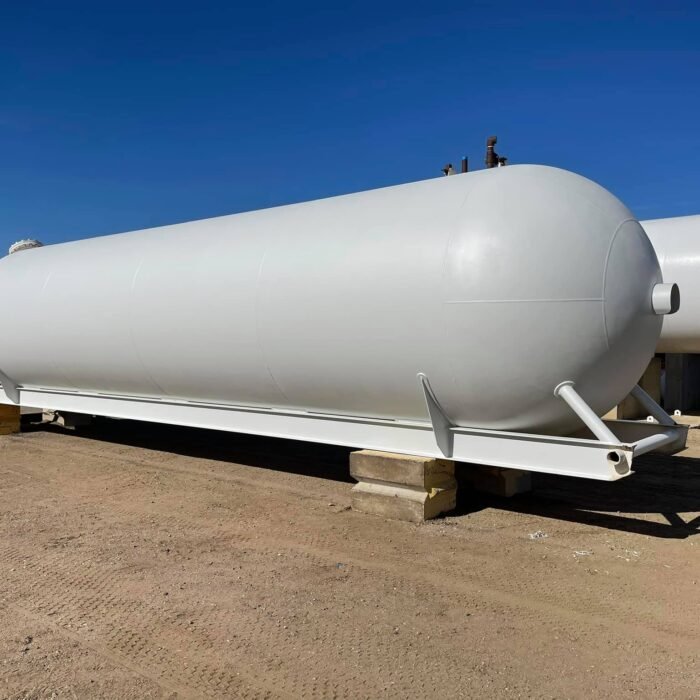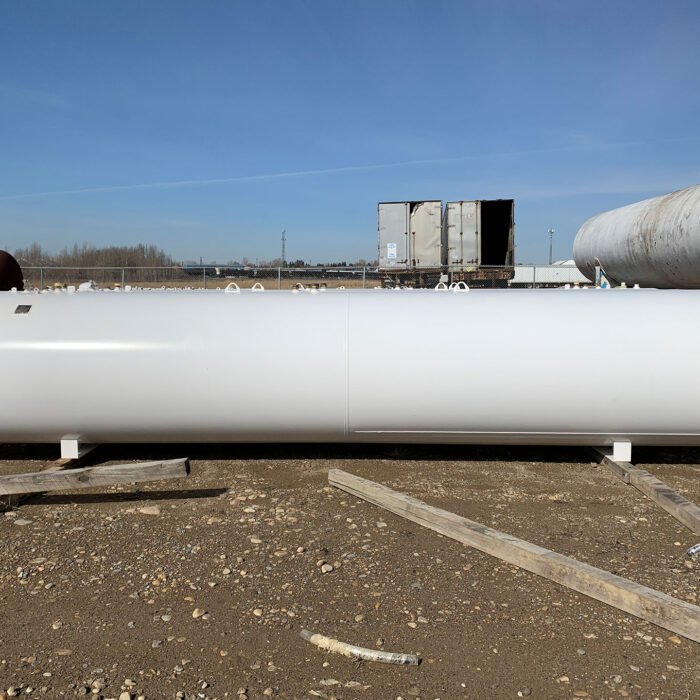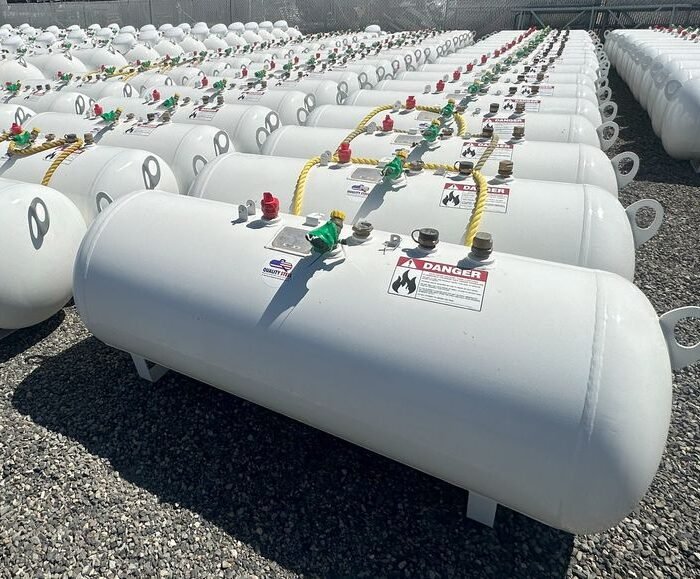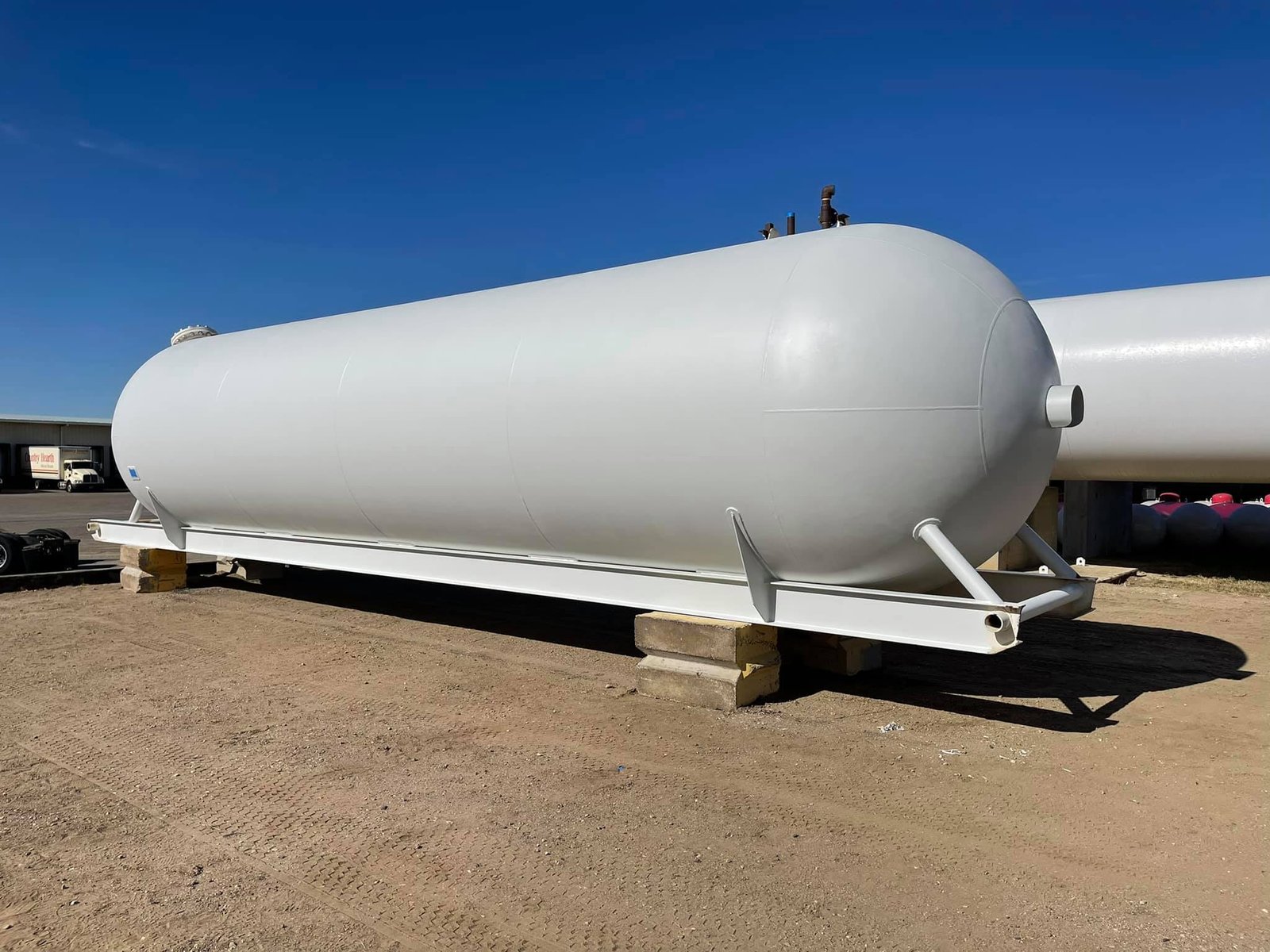
Description
At this capacity every detail matters: foundation, spacing, transfer equipment and the schedule that keeps the vessel earning.
The load behind a vessel like this is usually a bulk plant, a distribution operation or a continuous industrial burner.
Filled to the 80% limit this vessel holds about 24,000 gallons of propane — roughly 2,196 million BTU, or about 101,760 lb of product. Against a steady 100,000 BTU/hr load that is roughly 915 days of continuous running before it needs refilling.
Nothing in our range is larger. Above 30,000 gallons, storage becomes a bespoke engineering exercise and we quote it accordingly.
Key specification
- Shell capacity: 30,000 gallons
- Usable propane at 80% fill: approximately 24,000 gallons
- Mass of propane at full fill: approximately 101,760 lb
- Energy held when full: approximately 2,196 million BTU
- Installation: Skid mounted
- Certification: ASME stamped
- Condition: Confirmed on your invoice
- Fuel: Propane / LPG
Installation and siting
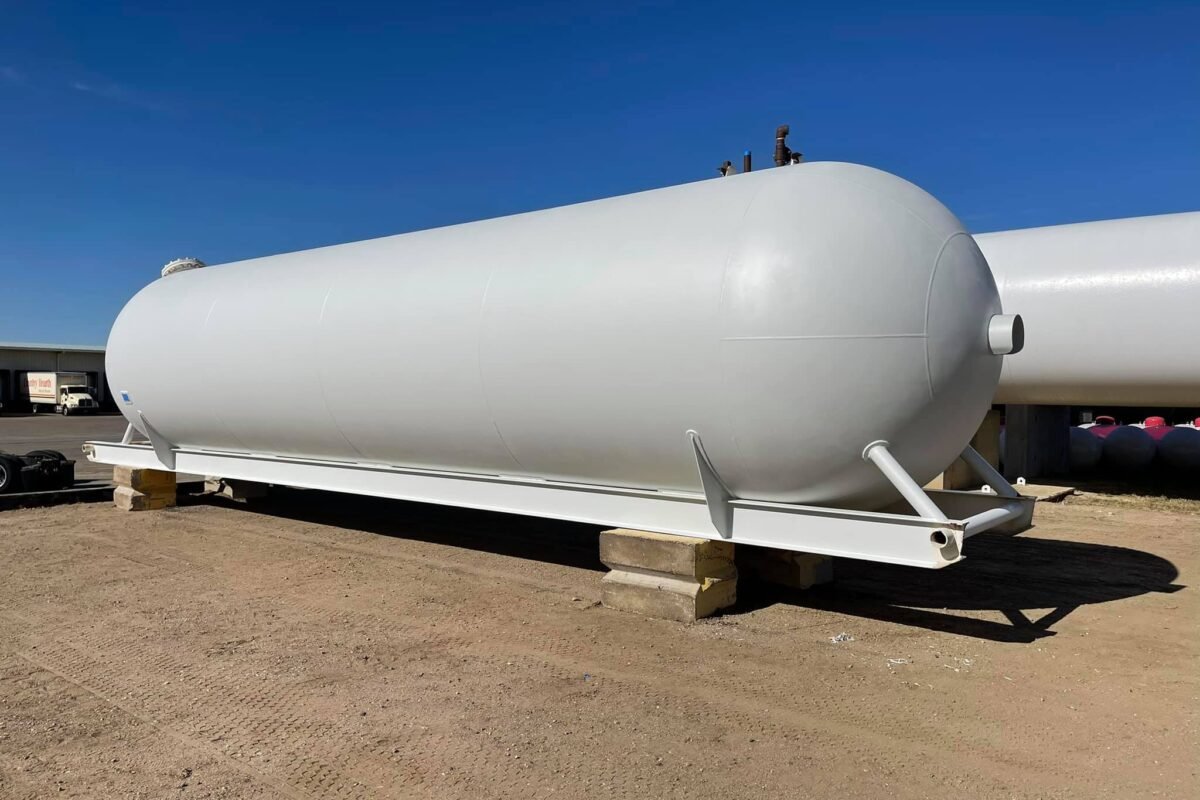
Skid mounting makes the vessel relocatable. The tank, its saddles and the transfer fittings are built as one unit that can be craned onto a pad, a trailer or a hardstanding and moved again when the site changes.
This is supplied as equipment, not as an installed service. NFPA 58 and your local authority govern how and where it may be set.
Certification and paperwork
Condition is confirmed on the invoice. Whichever we ship, it is stamp-verified, pressure tested, and documented for the specific unit you receive.
Service valve, fill valve, relief valve, float gauge and vapour connection are all checked before dispatch, and anything that does not pass is replaced rather than nursed along.
Running costs
The economics of propane are mostly delivery economics. Storage that lets you take a full load when prices are low pays for itself faster than most owners expect.
Before you order
Tell us the delivery ZIP when you enquire and we will quote the tank and the freight in the same reply, including any access surcharge — not after you have paid.
Have the appliance ratings to hand when you call. Total BTU and the climate decide the capacity; everything else is siting.