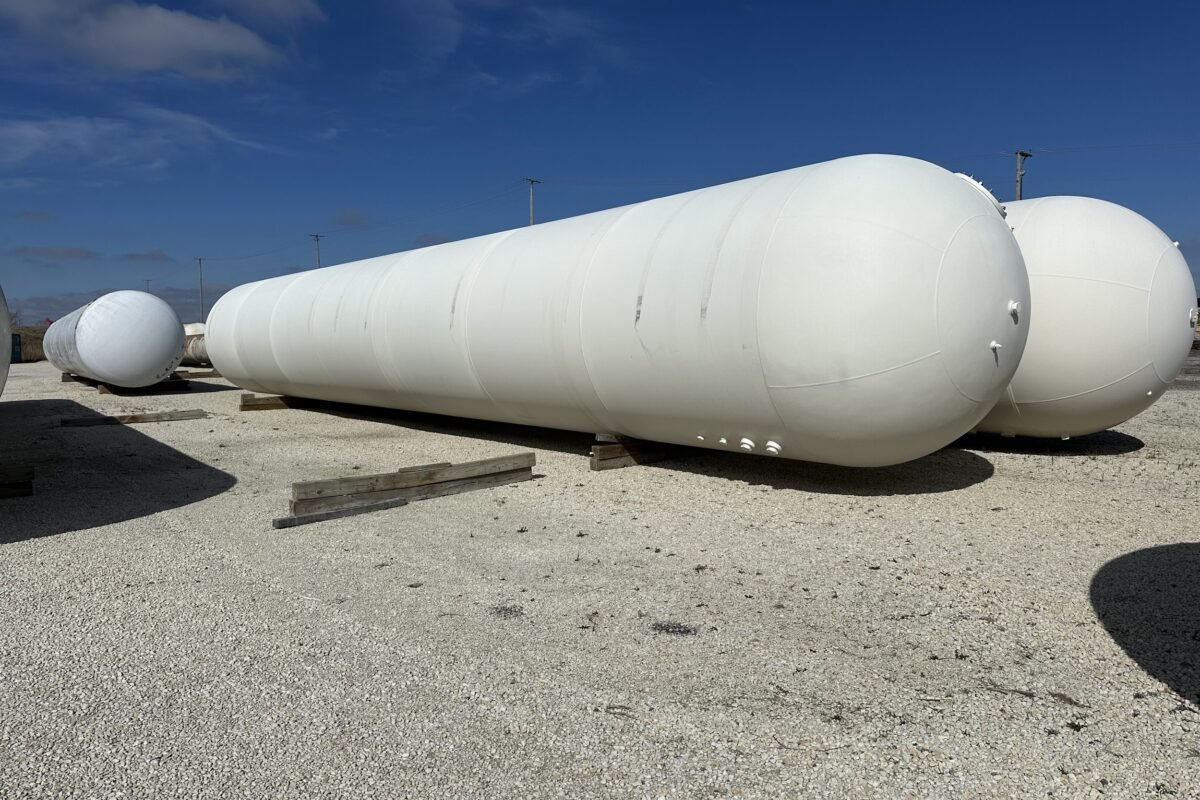
Description
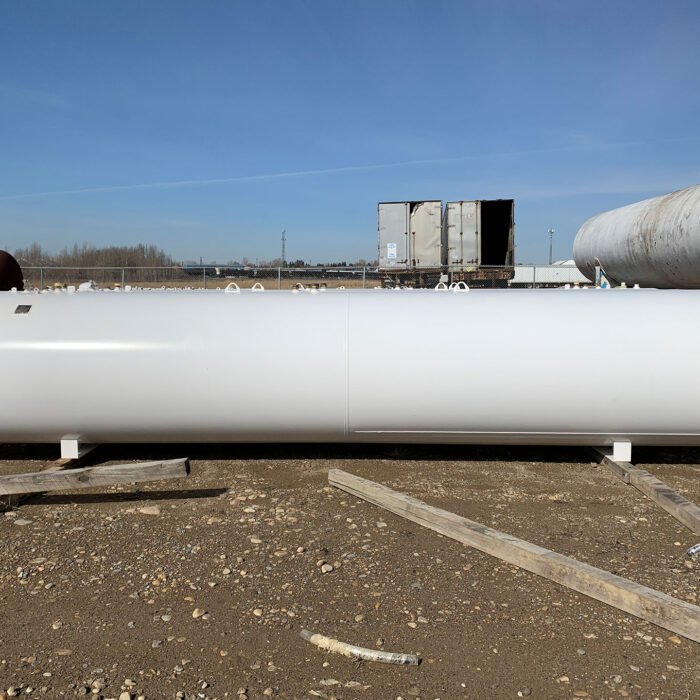
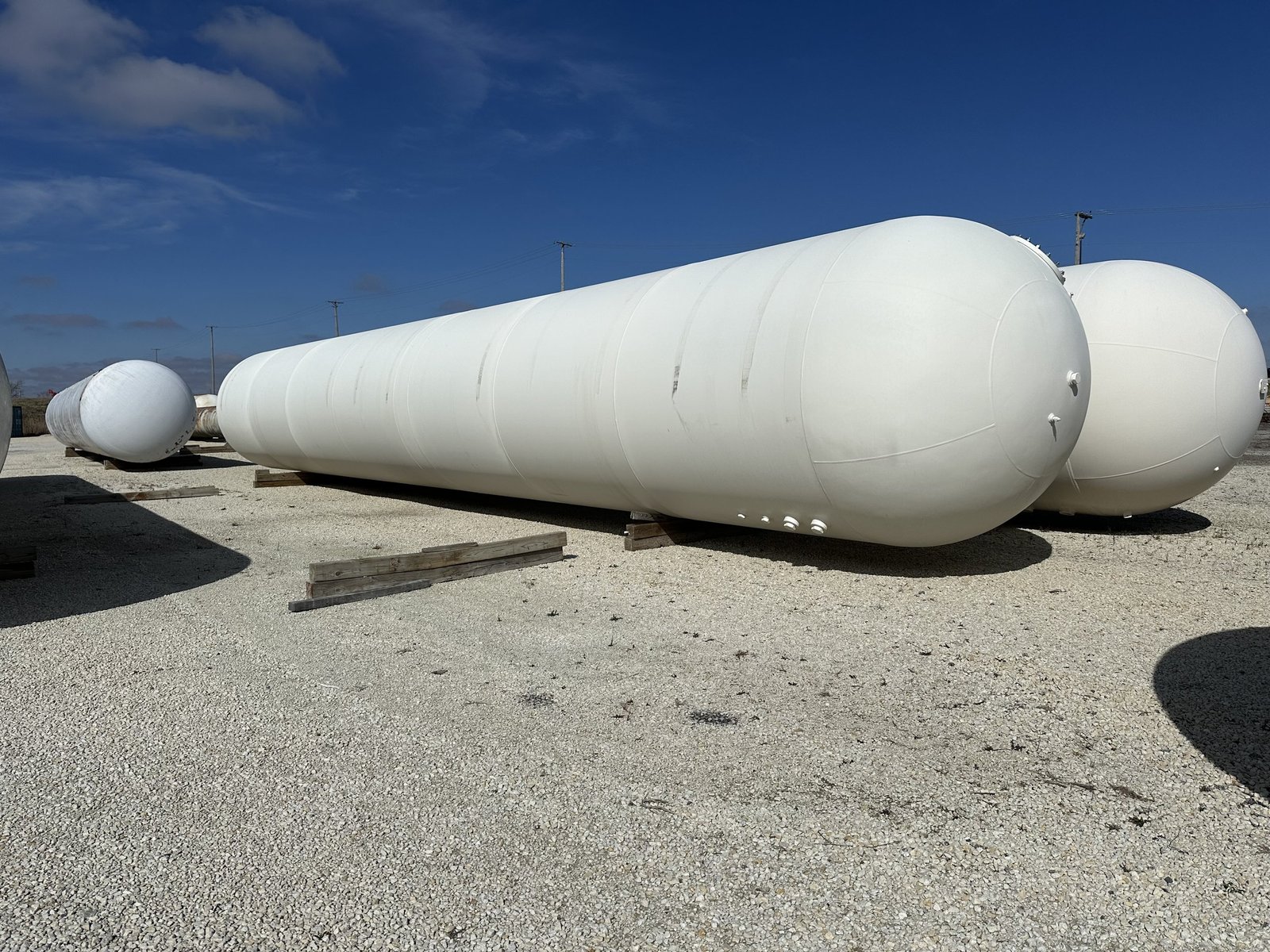
This is plant-scale storage — the class of vessel that sits behind a bulk plant, a distributor’s yard or a continuous process load.
Vessels this size serve bulk plants, NGL and LPG storage, distributor yards and continuous process heat.
Filled to the 80% limit this vessel holds about 24,000 gallons of propane — roughly 2,196 million BTU, or about 101,760 lb of product. Against a steady 100,000 BTU/hr load that is roughly 915 days of continuous running before it needs refilling.
Nothing in our range is larger. Above 30,000 gallons, storage becomes a bespoke engineering exercise and we quote it accordingly.
Specification
- Shell capacity: 30,000 gallons
- Fillable volume: approximately 24,000 gallons
- Mass of propane at full fill: approximately 101,760 lb
- Heat content at full fill: approximately 2,196 million BTU
- Installation: Skid mounted
- Certification: ASME stamped
- Condition: Confirmed on your invoice
- Fuel: Propane / LPG
Installation and siting
Everything is mounted to the frame, so commissioning on a new site is a matter of setting it level and connecting up rather than rebuilding the installation.
This is supplied as equipment, not as an installed service. NFPA 58 and your local authority govern how and where it may be set.
What you receive
Whether new or certified used, nothing ships without a live stamp, a passed pressure test and the documentation to prove both.
Valves and fittings are inspected as a set. A vessel goes out with a working gauge and a relief valve in date, or it does not go out.
Refills and running costs
The economics of propane are mostly delivery economics. Storage that lets you take a full load when prices are low pays for itself faster than most owners expect.
Worth knowing before you buy
Size against the real load, not the optimistic one. A vessel one size too small costs more across ten years of refills than the larger one did on the day you bought it.
If you are between two capacities, go up. A tank that never drops below about 30% refills more cheaply per gallon and spends less of its life on the supplier’s emergency list.