Description
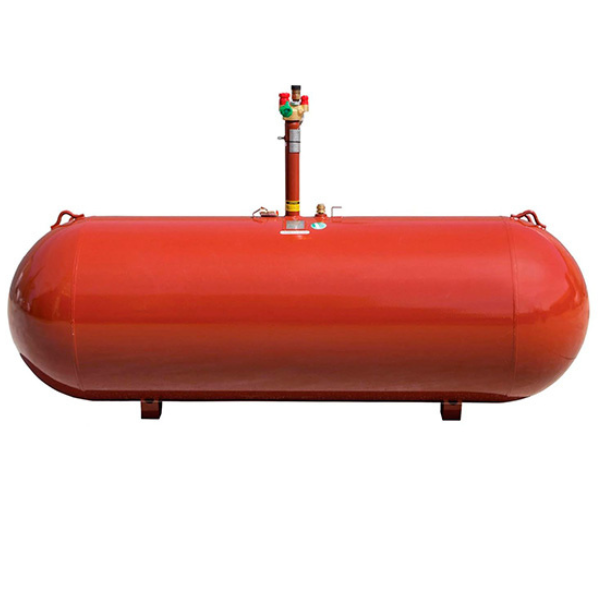
Specified for large homes, farms, workshops and commercial kitchens — anywhere a smaller tank would be back on the refill schedule every month.
Service is usually a mixed load — heating, hot water and process or kitchen demand on the same vessel.
Filled to the 80% limit this vessel holds about 800 gallons of propane — roughly 73 million BTU, or about 3,392 lb of product. Against a steady 100,000 BTU/hr load that is roughly 30 days of continuous running before it needs refilling.
In our range it sits between the 500 gallon and the 1,150 gallon. If the load is borderline, the 1,150 is the safer buy and the freight is the same either way.
Specifications
- Water capacity: 1,000 gallons
- Working volume (80% fill): approximately 800 gallons
- Weight of propane when filled: approximately 3,392 lb
- Energy content when full: approximately 73 million BTU
- Installation: Underground (buried)
- Certification: ASME stamped
- Condition: Confirmed on your invoice
- Fuel: Propane / LPG
Getting it on site
A buried vessel keeps its coating only if the backfill is right and the anode is connected and working. Those two details are what separate a thirty-year installation from an expensive excavation in year eight.
This is supplied as equipment, not as an installed service. NFPA 58 and your local authority govern how and where it may be set.
Certification and paperwork
Every vessel is stamp-verified and pressure tested before dispatch, and the data plate photograph and test record travel with the invoice.
All connections are inspected and protected for transit, so the installing contractor starts with clean threads and a working gauge.
Refills and running costs
Refill pricing rewards volume. A tank that takes a full delivery in one visit will always beat one that needs topping up twice.
Before you commit
Buy the documentation, not just the steel. A vessel without a legible stamp and a test record is worth a fraction of one with both, whatever the listing says.
Check your local clearances before ordering. Setback distances from buildings, boundaries and ignition sources are set by code and they decide where — and sometimes whether — a given capacity can go.