Description
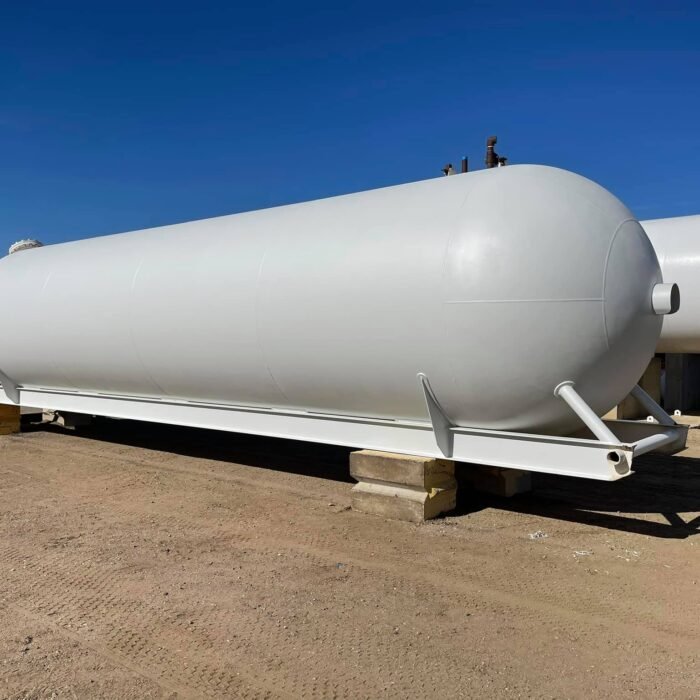
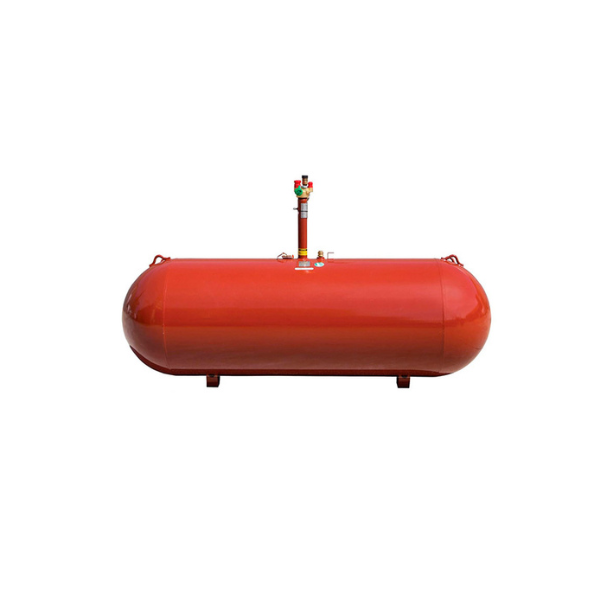
The standard domestic bulk tank. Heat, hot water, cooking and a dryer on one vessel, refilled a couple of times a year rather than monthly.
It runs the whole house, including the appliances people forget to count when they size a tank too small.
Filled to the 80% limit this vessel holds about 400 gallons of propane — roughly 37 million BTU, or about 1,696 lb of product. Against a steady 100,000 BTU/hr load that is roughly 15 days of continuous running before it needs refilling.
Against the 330 gallon it buys real headroom; against the 1,000 it saves footprint and pad. That trade-off is usually decided by the site, not the load.
Specifications
- Water capacity: 500 gallons
- Working volume (80% fill): approximately 400 gallons
- Mass of propane at full fill: approximately 1,696 lb
- Energy held when full: approximately 37 million BTU
- Installation: Underground (buried)
- Certification: ASME stamped
- Condition: New
- Fuel: Propane / LPG
Installation and siting
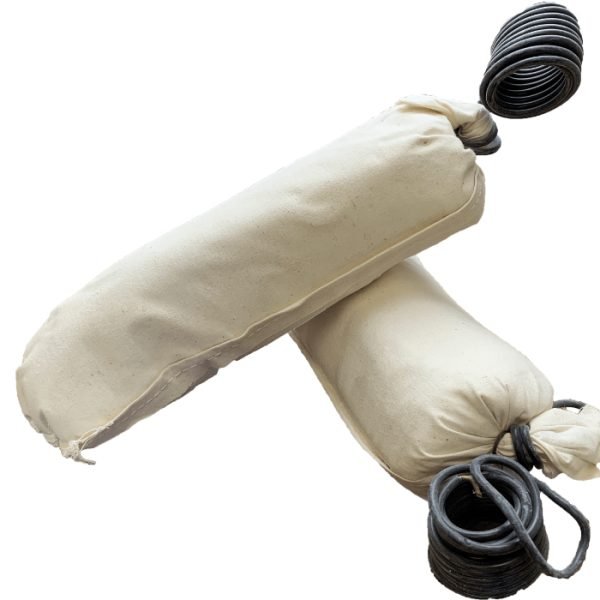
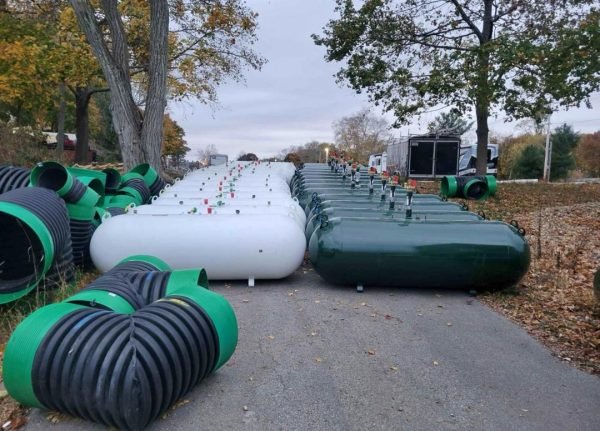
Buried installation keeps the vessel out of sight and off the usable footprint of the plot, which is usually why it is chosen over an above-ground tank of the same capacity. The trade-off is excavation, a dome and riser for access to the valves, and cathodic protection that has to be maintained.
We supply and deliver; we do not install. A propane vessel must be set and commissioned by a licensed propane professional under NFPA 58 and your local code.
What you receive
Supplied new, with the manufacturer’s warranty passed through to you and full certification documentation sent with the invoice.
The gauge and the relief valve get particular attention — an unreadable gauge causes bad decisions and a tired relief valve causes worse ones.
Refills and running costs
Buying propane in summer and storing it through winter is the oldest saving in this trade, and it only works if the vessel is big enough to be worth filling.
Buying notes
Order ahead of the season if you can. Everyone specifies propane storage in the first cold week, and that is the worst week to be waiting on freight.
Check your local clearances before ordering. Setback distances from buildings, boundaries and ignition sources are set by code and they decide where — and sometimes whether — a given capacity can go.