Description
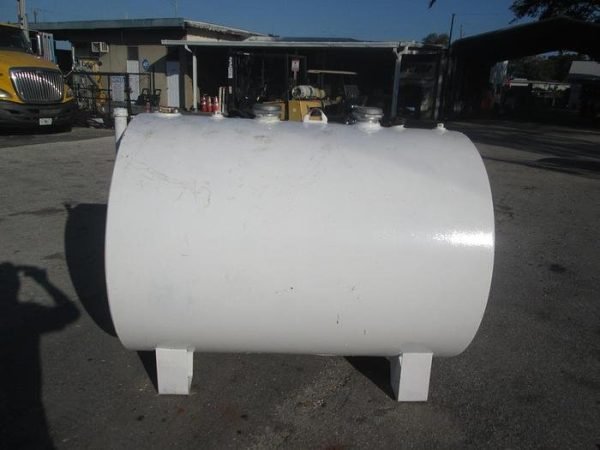
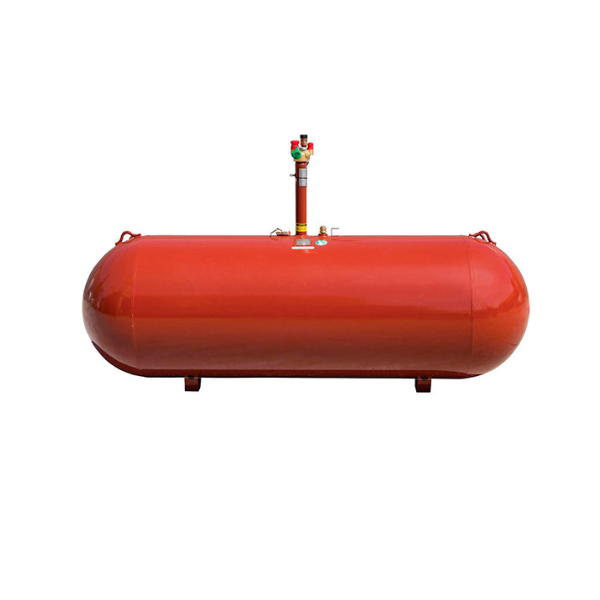
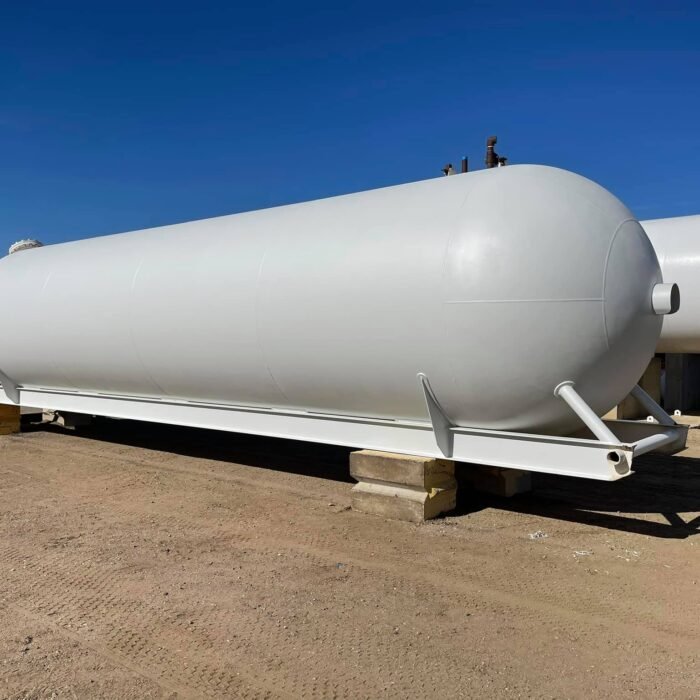
The workhorse of domestic propane. Big enough to cover a full winter load, common enough that every installer knows how to set one.
Full domestic service — space heating, water heating and every gas appliance in the property.
Filled to the 80% limit this vessel holds about 400 gallons of propane — roughly 37 million BTU, or about 1,696 lb of product. Against a steady 100,000 BTU/hr load that is roughly 15 days of continuous running before it needs refilling.
The next size down is 330 gallons and the next up is 1,000. Stepping up costs less than most people assume once freight is counted only once.
Specifications
- Rated water capacity: 500 gallons
- Usable propane at 80% fill: approximately 400 gallons
- Mass of propane at full fill: approximately 1,696 lb
- Stored energy when full: approximately 37 million BTU
- Installation: Underground (buried)
- Certification: ASME stamped
- Condition: Confirmed on your invoice
- Fuel: Propane / LPG
Getting it on site
A buried vessel keeps its coating only if the backfill is right and the anode is connected and working. Those two details are what separate a thirty-year installation from an expensive excavation in year eight.
Have a licensed propane professional lined up before the vessel arrives. Permits, setbacks and the commissioning test all sit with them, and scheduling is easier before the tank is on the ground.
Condition and certification
Whether new or certified used, nothing ships without a live stamp, a passed pressure test and the documentation to prove both.
Valves and fittings are inspected as a set. A vessel goes out with a working gauge and a relief valve in date, or it does not go out.
Running costs
Larger vessels are cheaper to fill per gallon because suppliers price on delivery efficiency. A part-load top-up costs more per gallon than a bulk fill, every time.
Worth knowing before you buy
Check your local clearances before ordering. Setback distances from buildings, boundaries and ignition sources are set by code and they decide where — and sometimes whether — a given capacity can go.
If you are between two capacities, go up. A tank that never drops below about 30% refills more cheaply per gallon and spends less of its life on the supplier’s emergency list.