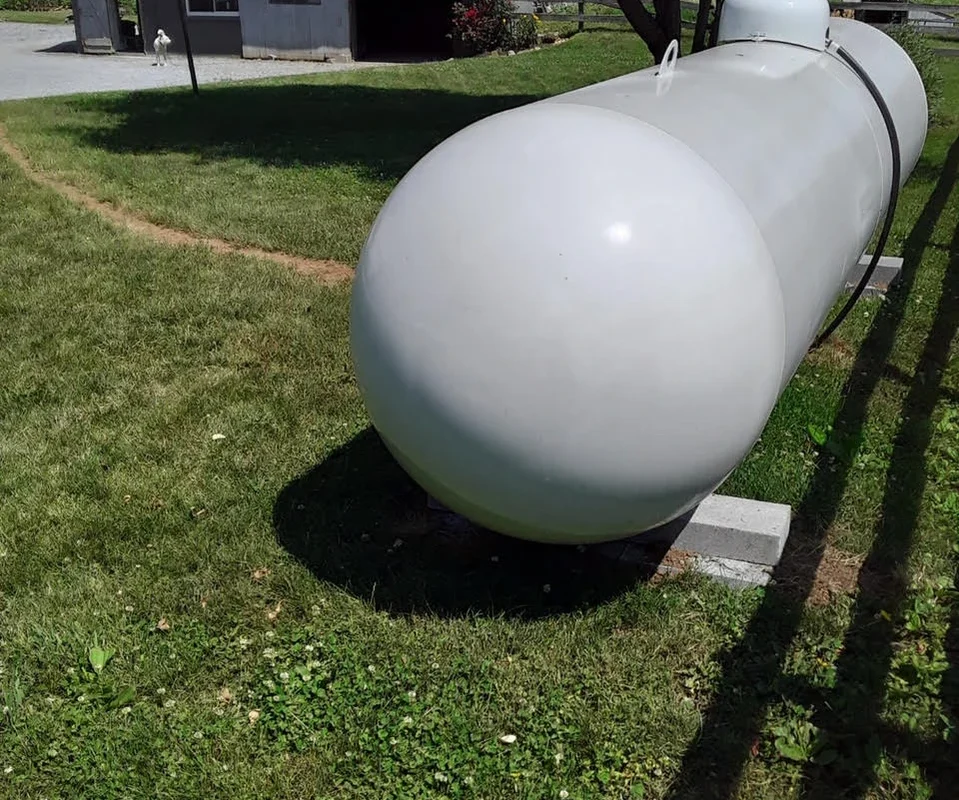
Description
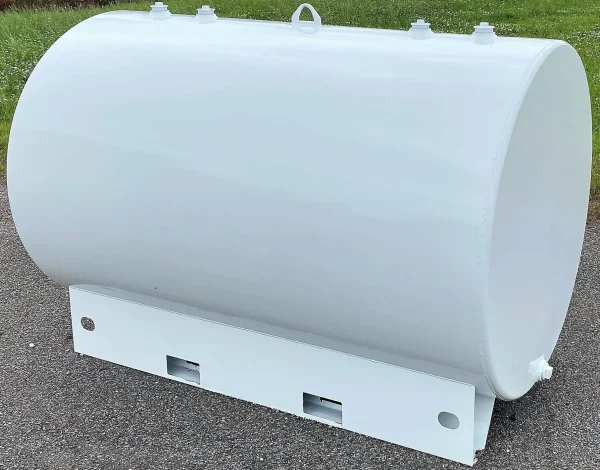
This capacity suits a property that needs more than a cylinder can hold but has no reason to run a whole-house bulk tank.
Usually specified for heating and hot water together, with a cooking range if the property is small.
Filled to the 80% limit this vessel holds about 260 gallons of propane — roughly 24 million BTU, or about 1,102 lb of product. Against a steady 100,000 BTU/hr load that is roughly 10 days of continuous running before it needs refilling.
Against the 320 gallon it buys real headroom; against the 330 it saves footprint and pad. That trade-off is usually decided by the site, not the load.
Technical details
- Total capacity: 325 gallons
- Working volume (80% fill): approximately 260 gallons
- Mass of propane at full fill: approximately 1,102 lb
- Stored energy when full: approximately 24 million BTU
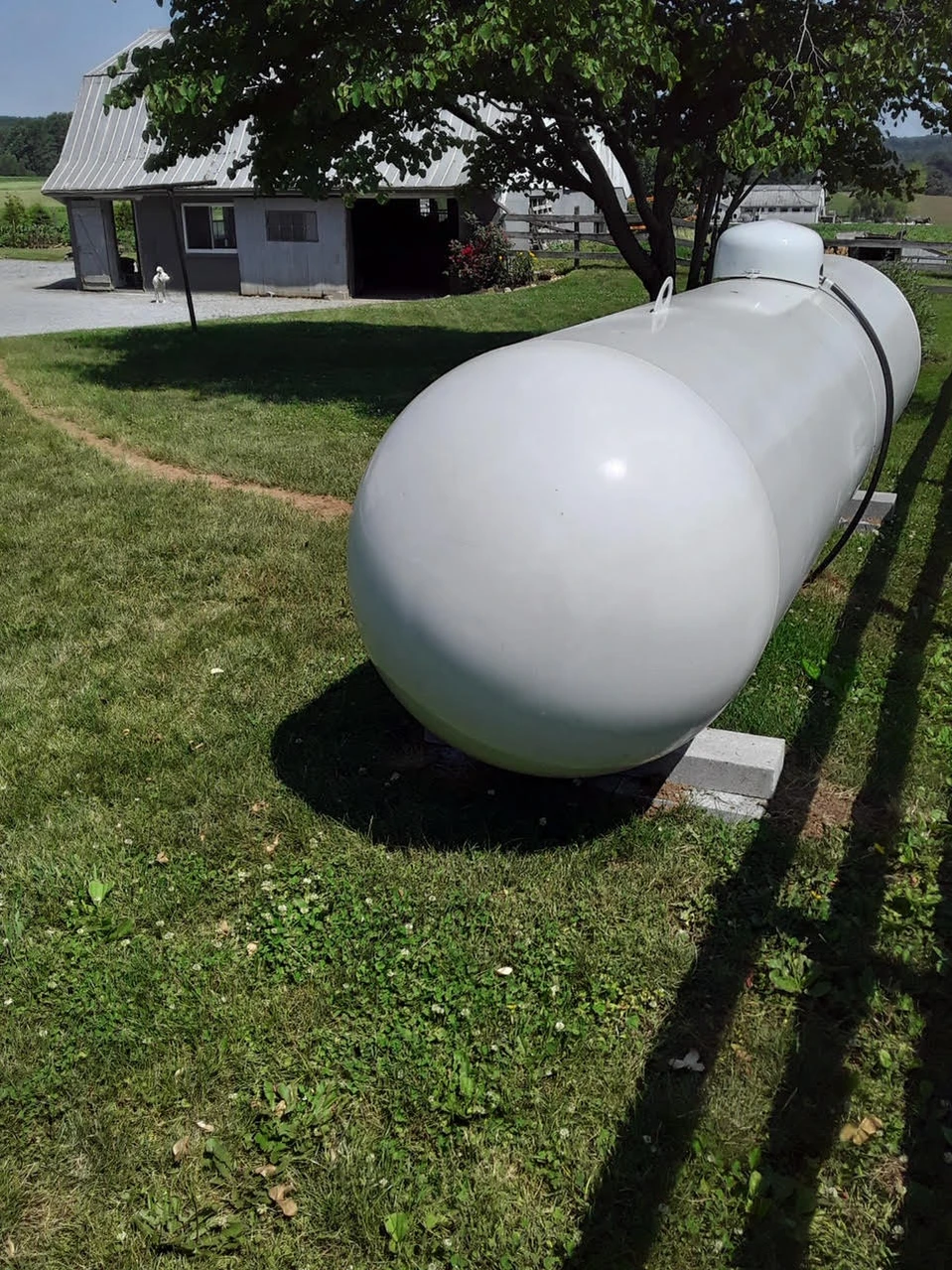
- Installation: Above ground
- Certification: ASME stamped
- Condition: Confirmed on your invoice
- Fuel: Propane / LPG
Siting and installation
Surface installation keeps the whole vessel inspectable. Coating faults, valve seepage and gauge problems are all visible before they become expensive, which is the main argument for staying above ground where the site allows it.
Have a licensed propane professional lined up before the vessel arrives. Permits, setbacks and the commissioning test all sit with them, and scheduling is easier before the tank is on the ground.
Condition and certification
Every vessel is stamp-verified and pressure tested before dispatch, and the data plate photograph and test record travel with the invoice.
Valves and fittings are inspected as a set. A vessel goes out with a working gauge and a relief valve in date, or it does not go out.
Cost of ownership
Refill pricing rewards volume. A tank that takes a full delivery in one visit will always beat one that needs topping up twice.
Before you commit
If you are between two capacities, go up. A tank that never drops below about 30% refills more cheaply per gallon and spends less of its life on the supplier’s emergency list.
Size against the real load, not the optimistic one. A vessel one size too small costs more across ten years of refills than the larger one did on the day you bought it.