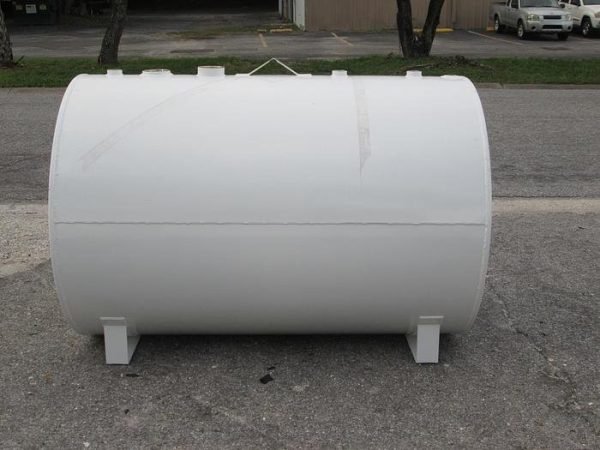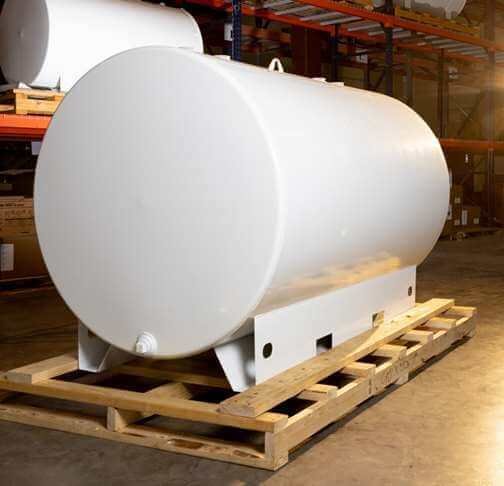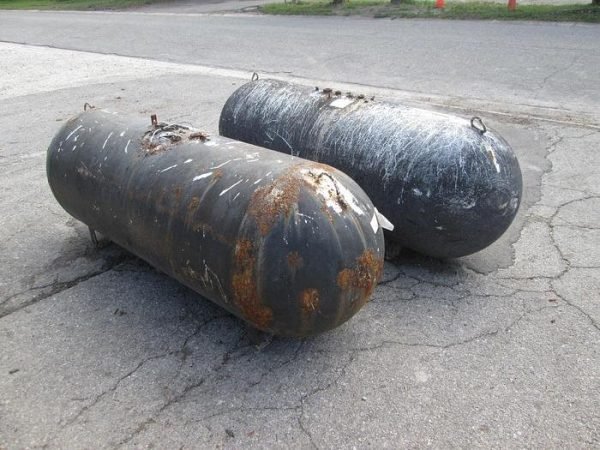
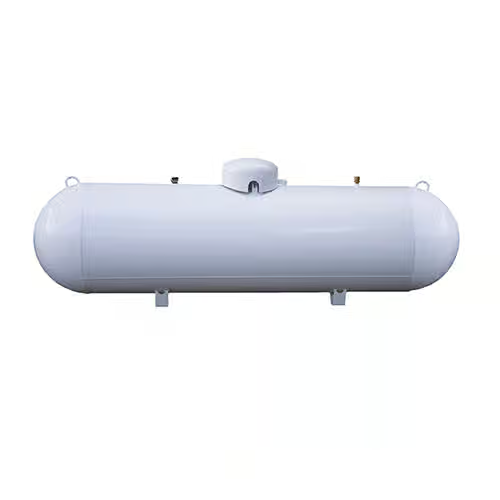
Description
Middle of the range, and often the right answer: substantial storage without the footprint or the delivery minimum of a bulk vessel.
Usually specified for heating and hot water together, with a cooking range if the property is small.
Filled to the 80% limit this vessel holds about 256 gallons of propane — roughly 23 million BTU, or about 1,085 lb of product. Against a steady 100,000 BTU/hr load that is roughly 10 days of continuous running before it needs refilling.
In our range it sits between the 250 gallon and the 325 gallon. If the load is borderline, the 325 is the safer buy and the freight is the same either way.
Key specification
- Shell capacity: 320 gallons
- Propane held at the 80% fill limit: approximately 256 gallons
- Product weight when full: approximately 1,085 lb
- Energy content when full: approximately 23 million BTU
- Installation: Above ground
- Orientation: Horizontal
- Certification: ASME stamped
- Condition: Confirmed on your invoice
- Fuel: Propane / LPG
Siting notes
The simplest installation there is: a level base, correct clearances, and the tank goes down. No excavation, no cathodic protection, and any future work happens in daylight rather than in a hole.
Our responsibility ends at the delivery; a licensed propane contractor takes it from there. Codes on siting, clearances and commissioning are not optional and not ours to sign off.
Condition and certification
Whether new or certified used, nothing ships without a live stamp, a passed pressure test and the documentation to prove both.
Valves and fittings are inspected as a set. A vessel goes out with a working gauge and a relief valve in date, or it does not go out.
The economics
Owning the tank rather than leasing it means you choose the supplier. That single change is usually worth more over five years than the difference in purchase price between capacities.
Before you commit
Ask what the regulator and first-stage arrangement will be. The tank is only half the specification, and the wrong regulator will starve appliances the vessel could easily supply.
Have the appliance ratings to hand when you call. Total BTU and the climate decide the capacity; everything else is siting.