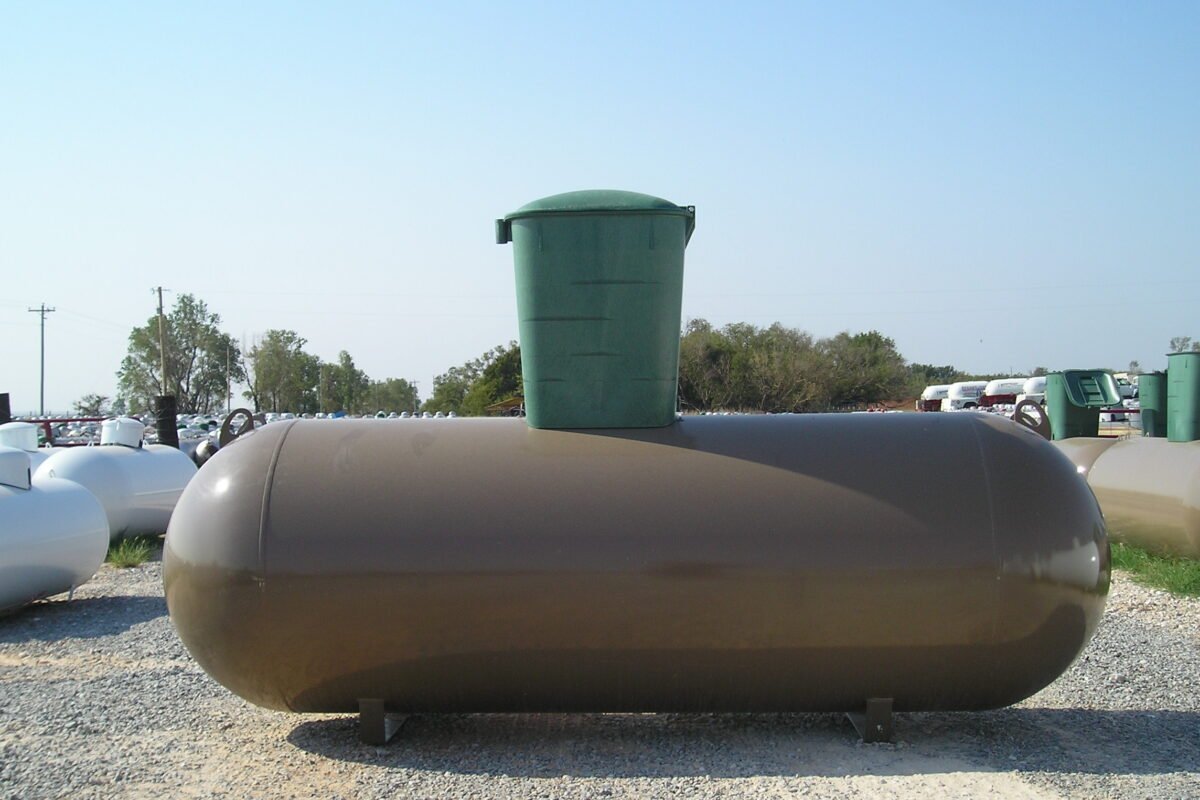
Description
Enough storage to ride out a delivery delay, compact enough to site against a boundary without a planning conversation.
Typical service is a small house, a holiday let, or a well-insulated property with a light heating demand.
Filled to the 80% limit this vessel holds about 200 gallons of propane — roughly 18 million BTU, or about 848 lb of product. Against a steady 100,000 BTU/hr load that is roughly 8 days of continuous running before it needs refilling.
The next size down is 200 gallons and the next up is 320. Stepping up costs less than most people assume once freight is counted only once.
Specification
- Water capacity: 250 gallons
- Usable propane at 80% fill: approximately 200 gallons
- Product weight when full: approximately 848 lb
- Energy content when full: approximately 18 million BTU
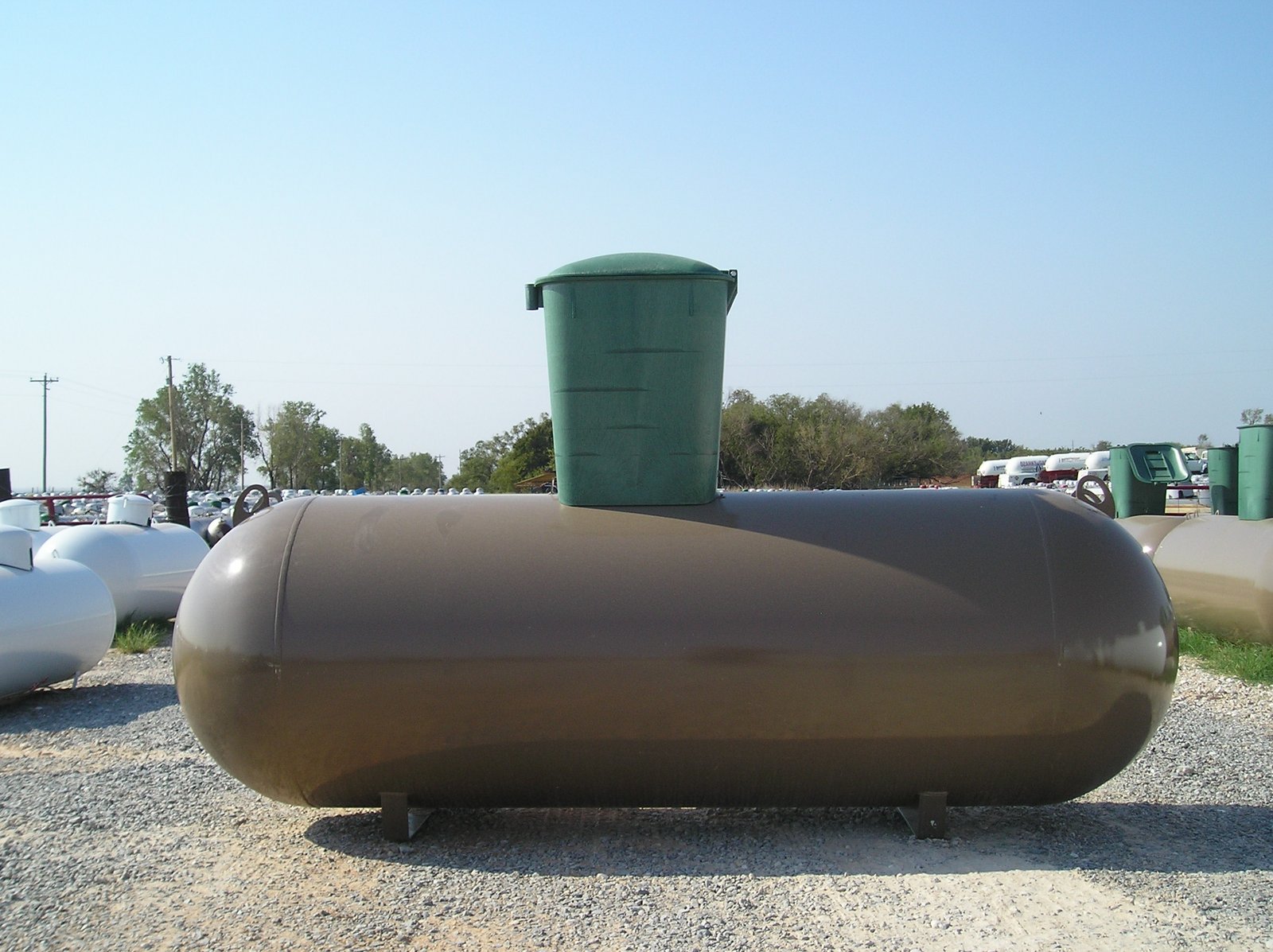
- Installation: Underground (buried)
- Certification: ASME stamped
- Condition: Confirmed on your invoice
- Fuel: Propane / LPG
Siting and installation
Buried installation keeps the vessel out of sight and off the usable footprint of the plot, which is usually why it is chosen over an above-ground tank of the same capacity. The trade-off is excavation, a dome and riser for access to the valves, and cathodic protection that has to be maintained.
Our responsibility ends at the delivery; a licensed propane contractor takes it from there. Codes on siting, clearances and commissioning are not optional and not ours to sign off.
Condition and documentation
Condition is confirmed on the invoice. Whichever we ship, it is stamp-verified, pressure tested, and documented for the specific unit you receive.
The gauge and the relief valve get particular attention — an unreadable gauge causes bad decisions and a tired relief valve causes worse ones.
Cost of ownership
Buying propane in summer and storing it through winter is the oldest saving in this trade, and it only works if the vessel is big enough to be worth filling.
Worth knowing before you buy
Ask what the regulator and first-stage arrangement will be. The tank is only half the specification, and the wrong regulator will starve appliances the vessel could easily supply.
Think about the delivery vehicle as well as the tank. A site a bulk truck cannot reach turns a cheap refill into an expensive one for the rest of the tank’s life.