Description
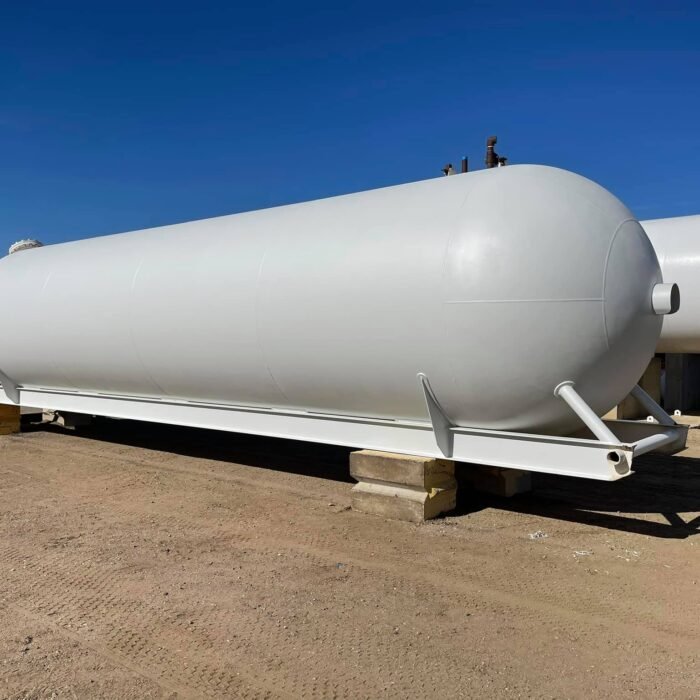
Industrial bulk storage. Vessels at this capacity are specified against a site’s process load and its resupply logistics, not a catalogue.
Specified for storage and distribution operations where throughput, not consumption, sets the capacity.
Filled to the 80% limit this vessel holds about 16,000 gallons of propane — roughly 1,464 million BTU, or about 67,840 lb of product. Against a steady 100,000 BTU/hr load that is roughly 610 days of continuous running before it needs refilling.
Against the 18,000 gallon it buys real headroom; against the 30,000 it saves footprint and pad. That trade-off is usually decided by the site, not the load.
Specification
- Shell capacity: 20,000 gallons
- Working volume (80% fill): approximately 16,000 gallons
- Mass of propane at full fill: approximately 67,840 lb
- Heat content at full fill: approximately 1,464 million BTU
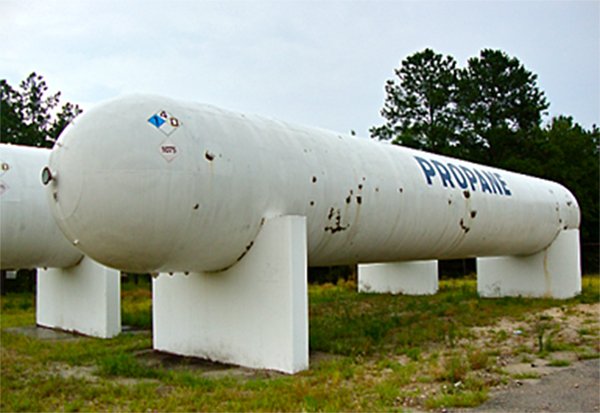
- Installation: Above ground
- Certification: ASME stamped
- Condition: Confirmed on your invoice
- Fuel: Propane / LPG
Siting notes
Set on a prepared pad, an above-ground vessel is the cheapest to install and by a distance the easiest to service. The gauge is readable from the ground and a technician can reach every fitting without lifting anything.
We supply and deliver; we do not install. A propane vessel must be set and commissioned by a licensed propane professional under NFPA 58 and your local code.
What you receive
The exact condition and specification are confirmed in writing before you pay, along with the test record for the vessel itself.
Every fitting is checked against the vessel’s specification, and the relief valve date is confirmed before dispatch.
Cost of ownership
Owning the tank rather than leasing it means you choose the supplier. That single change is usually worth more over five years than the difference in purchase price between capacities.
Worth knowing before you buy
Think about the delivery vehicle as well as the tank. A site a bulk truck cannot reach turns a cheap refill into an expensive one for the rest of the tank’s life.
Have the appliance ratings to hand when you call. Total BTU and the climate decide the capacity; everything else is siting.