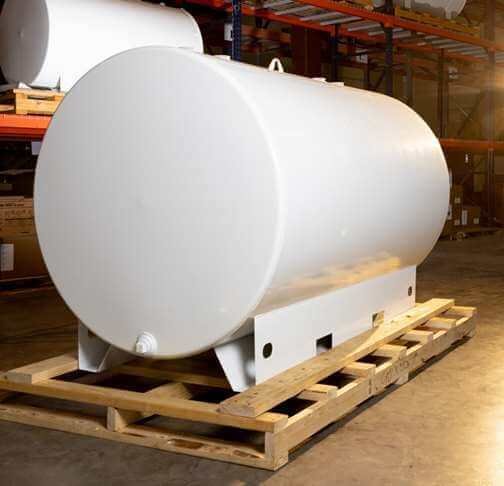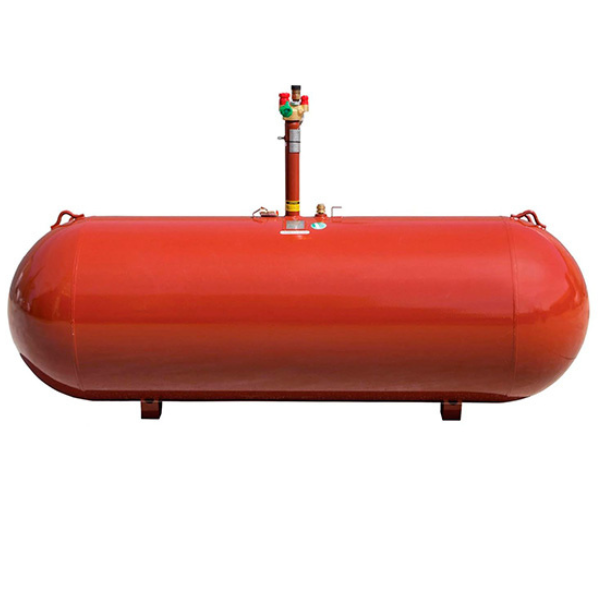
Description
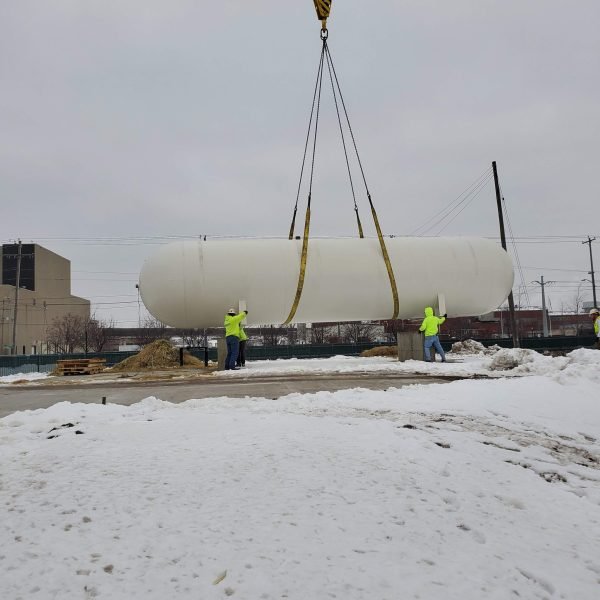
Industrial bulk storage. Vessels at this capacity are specified against a site’s process load and its resupply logistics, not a catalogue.
Specified for storage and distribution operations where throughput, not consumption, sets the capacity.
Filled to the 80% limit this vessel holds about 14,400 gallons of propane — roughly 1,318 million BTU, or about 61,056 lb of product. Against a steady 100,000 BTU/hr load that is roughly 549 days of continuous running before it needs refilling.
The next size down is 11,600 gallons and the next up is 20,000. Stepping up costs less than most people assume once freight is counted only once.
Specification
- Water capacity: 18,000 gallons
- Usable propane at 80% fill: approximately 14,400 gallons
- Weight of propane when filled: approximately 61,056 lb
- Heat content at full fill: approximately 1,318 million BTU
- Installation: Above ground
- Certification: ASME stamped
- Condition: Confirmed on your invoice
- Fuel: Propane / LPG
Siting notes
Set on a prepared pad, an above-ground vessel is the cheapest to install and by a distance the easiest to service. The gauge is readable from the ground and a technician can reach every fitting without lifting anything.
We supply and deliver; we do not install. A propane vessel must be set and commissioned by a licensed propane professional under NFPA 58 and your local code.
Condition and documentation
Every vessel is stamp-verified and pressure tested before dispatch, and the data plate photograph and test record travel with the invoice.
Valves and fittings are inspected as a set. A vessel goes out with a working gauge and a relief valve in date, or it does not go out.
Running costs
A tank you own has no rental charge attached to it, and no clause tying you to one supplier’s posted price.
Before you order
Buy the documentation, not just the steel. A vessel without a legible stamp and a test record is worth a fraction of one with both, whatever the listing says.
Think about the delivery vehicle as well as the tank. A site a bulk truck cannot reach turns a cheap refill into an expensive one for the rest of the tank’s life.