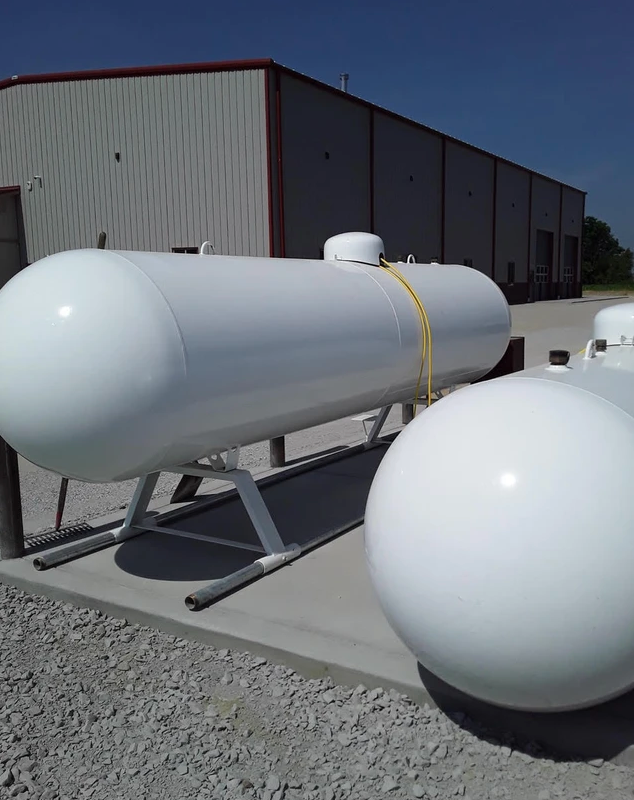
Description
Specified for large homes, farms, workshops and commercial kitchens — anywhere a smaller tank would be back on the refill schedule every month.
Loads at this size are usually multiple heaters, a commercial kitchen, or agricultural drying plant.
Filled to the 80% limit this vessel holds about 1,200 gallons of propane — roughly 110 million BTU, or about 5,088 lb of product. Against a steady 100,000 BTU/hr load that is roughly 46 days of continuous running before it needs refilling.
The next size down is 1,150 gallons and the next up is 2,000. Stepping up costs less than most people assume once freight is counted only once.
Key specification
- Total capacity: 1,500 gallons
- Working volume (80% fill): approximately 1,200 gallons
- Filled product weight: approximately 5,088 lb
- Energy held when full: approximately 110 million BTU
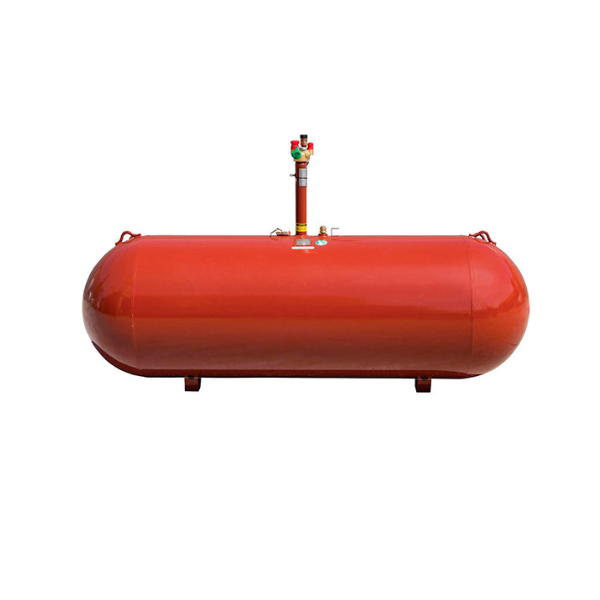
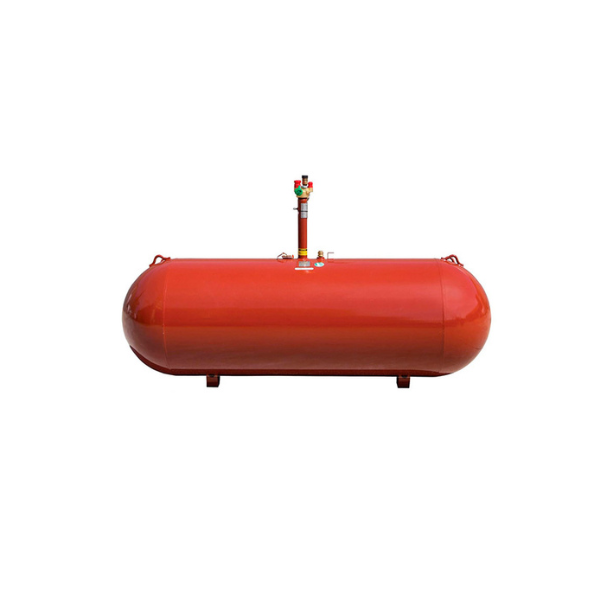
- Installation: Underground (buried)
- Certification: ASME stamped
- Condition: Confirmed on your invoice
- Fuel: Propane / LPG
Siting and installation
Underground siting is the answer when clearances or sightlines rule out a surface tank. Bedding, backfill and the anode connection all have to be right at install — this is not a vessel anyone wants to dig up twice.
Setting and commissioning must be done by a licensed propane professional in line with NFPA 58 and local code. Ask us if you need a name in your area.
Condition and certification
Every vessel is stamp-verified and pressure tested before dispatch, and the data plate photograph and test record travel with the invoice.
Every fitting is checked against the vessel’s specification, and the relief valve date is confirmed before dispatch.
The economics
Larger vessels are cheaper to fill per gallon because suppliers price on delivery efficiency. A part-load top-up costs more per gallon than a bulk fill, every time.
Before you commit
Think about the delivery vehicle as well as the tank. A site a bulk truck cannot reach turns a cheap refill into an expensive one for the rest of the tank’s life.
Buy the documentation, not just the steel. A vessel without a legible stamp and a test record is worth a fraction of one with both, whatever the listing says.