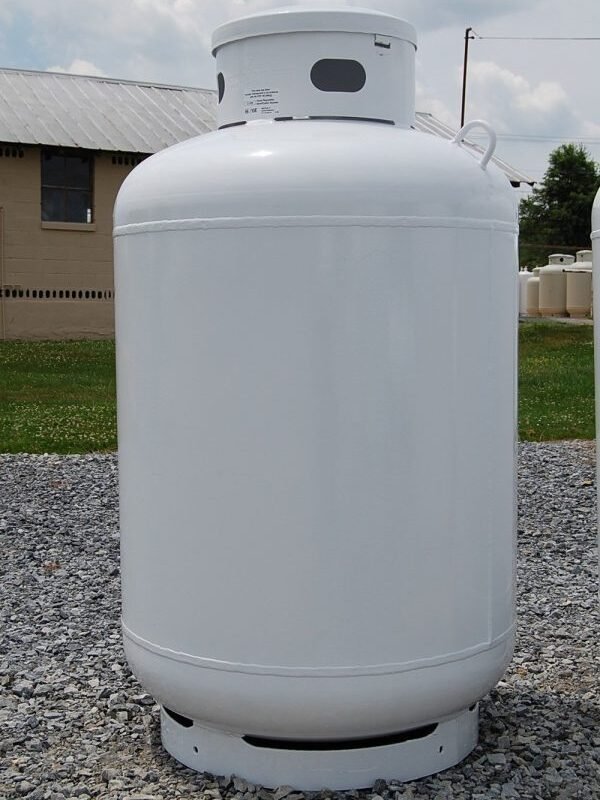
Description
Small footprint, permanent installation. This is where propane stops being a consumable you fetch and starts being a utility you own.
It usually carries one substantial appliance — a generator, a garage heater, or a cooking range.
Filled to the 80% limit this vessel holds about 96 gallons of propane — roughly 9 million BTU, or about 407 lb of product. On a 30,000 BTU/hr appliance that is around 293 hours of burn time from a full fill.
The next size down is 100 gallons and the next up is 200. Stepping up costs less than most people assume once freight is counted only once.
Specification
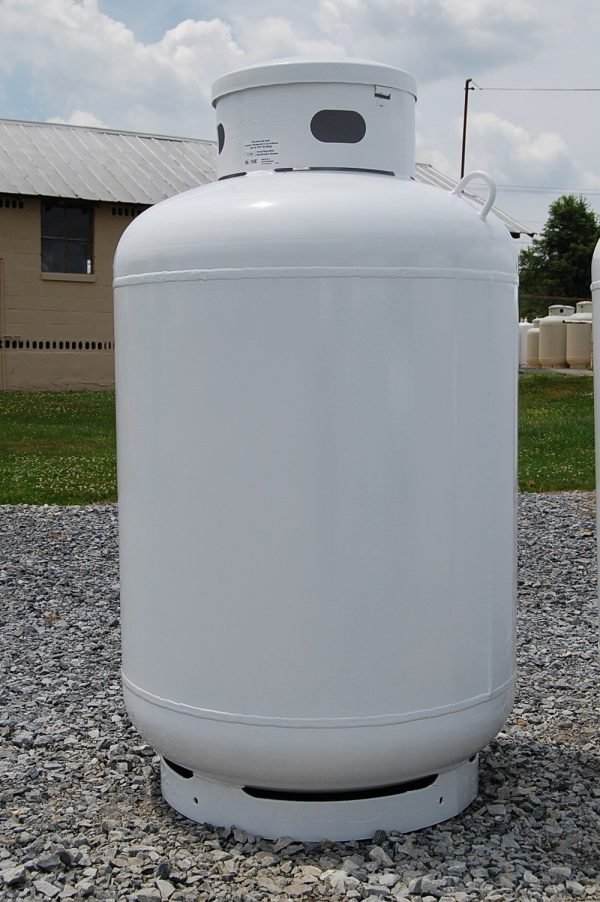
- Shell capacity: 120 gallons
- Usable propane at 80% fill: approximately 96 gallons
- Filled product weight: approximately 407 lb
- Energy held when full: approximately 9 million BTU
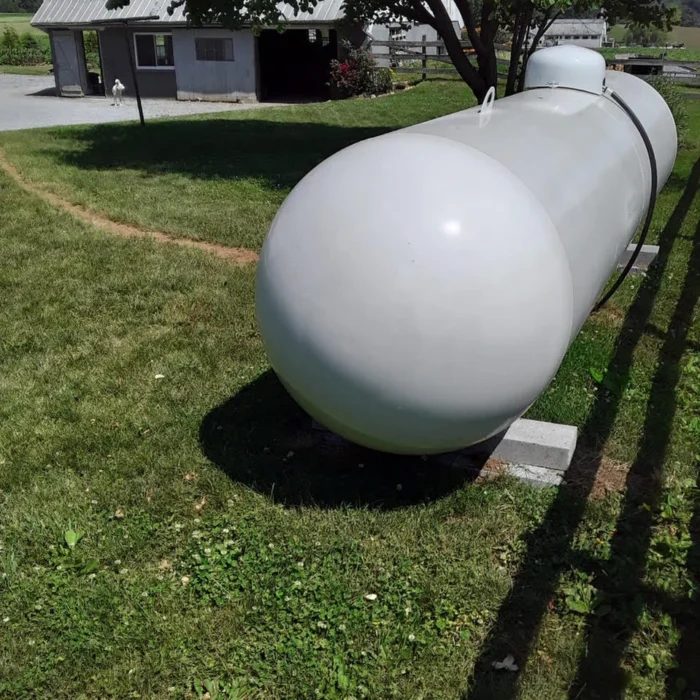
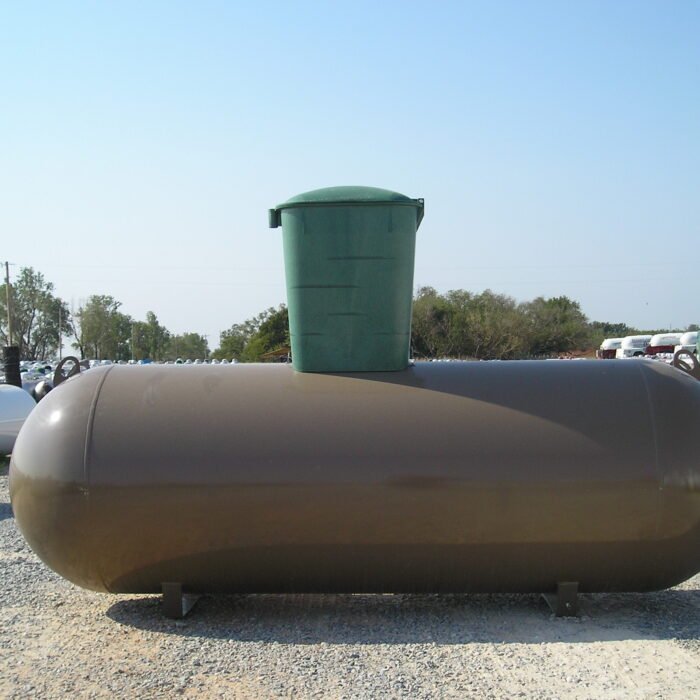
- Installation: Above ground
- Orientation: Vertical
- Certification: ASME stamped
- Condition: Confirmed on your invoice
- Fuel: Propane / LPG
Siting and installation
Surface installation keeps the whole vessel inspectable. Coating faults, valve seepage and gauge problems are all visible before they become expensive, which is the main argument for staying above ground where the site allows it.
Our responsibility ends at the delivery; a licensed propane contractor takes it from there. Codes on siting, clearances and commissioning are not optional and not ours to sign off.
Condition and certification
Each unit is checked, tested and photographed before dispatch, so what arrives is provably the vessel that was inspected.
Service valve, fill valve, relief valve, float gauge and vapour connection are all checked before dispatch, and anything that does not pass is replaced rather than nursed along.
Buying notes
Have the appliance ratings to hand when you call. Total BTU and the climate decide the capacity; everything else is siting.
Ask what the regulator and first-stage arrangement will be. The tank is only half the specification, and the wrong regulator will starve appliances the vessel could easily supply.