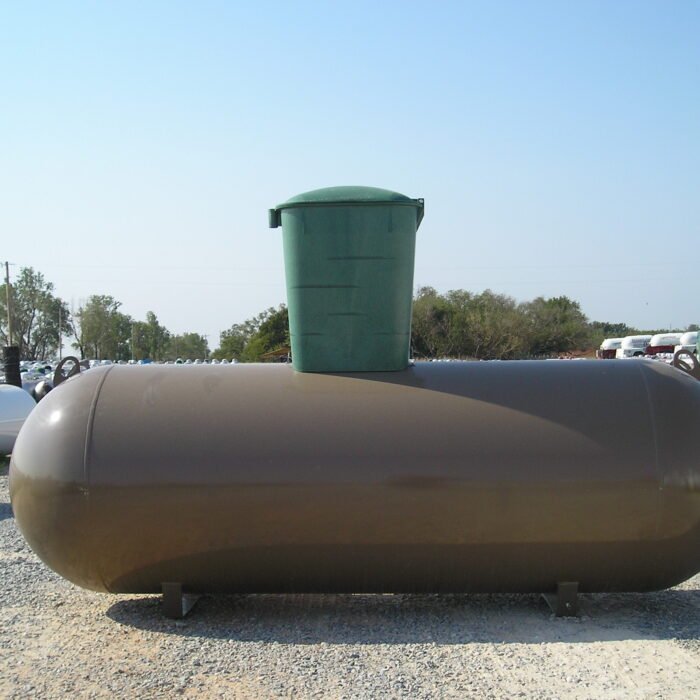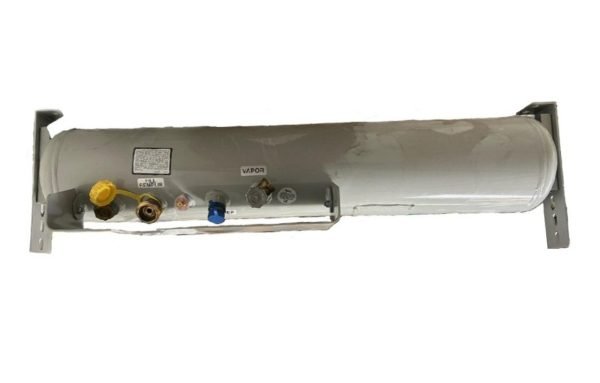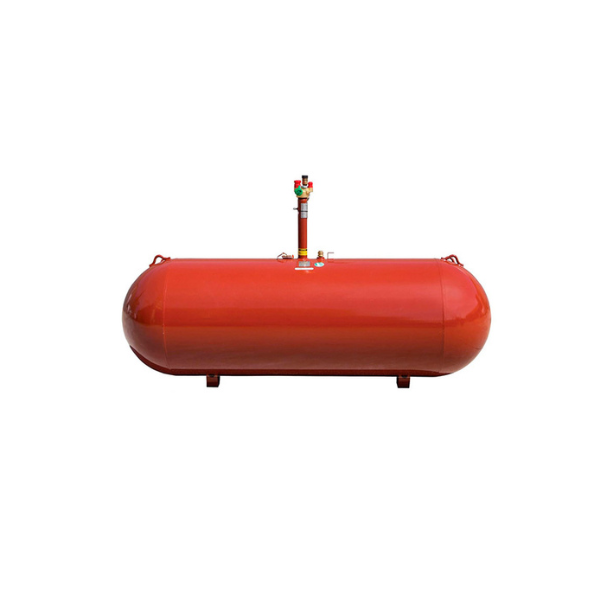
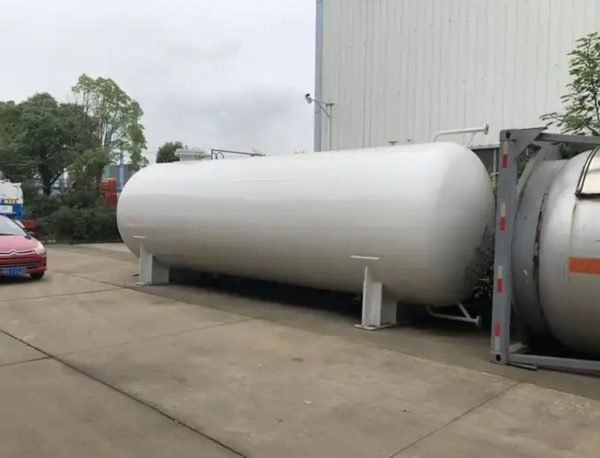
Description
Industrial capacity for NGL and LPG service, where storage volume is what determines how a business can buy and sell product.
It anchors a storage facility rather than serving a single load, with transfer equipment sized to match.
Filled to the 80% limit this vessel holds about 8,000 gallons of propane — roughly 732 million BTU, or about 33,920 lb of product. Against a steady 100,000 BTU/hr load that is roughly 305 days of continuous running before it needs refilling.
The next size down is 2,500 gallons and the next up is 11,600. Stepping up costs less than most people assume once freight is counted only once.
Specifications
- Water capacity: 10,000 gallons
- Propane held at the 80% fill limit: approximately 8,000 gallons
- Filled product weight: approximately 33,920 lb
- Stored energy when full: approximately 732 million BTU
- Installation: Above ground
- Certification: ASME stamped
- Condition: Confirmed on your invoice
- Fuel: Propane / LPG
Siting notes
Above-ground siting is the straightforward option: no excavation, no anode bag, and every valve and the gauge are reachable without opening a dome. It sits on legs or saddles on a level pad and can be inspected in place for the whole of its service life.
We supply and deliver; we do not install. A propane vessel must be set and commissioned by a licensed propane professional under NFPA 58 and your local code.
Certification and paperwork
Condition is confirmed on the invoice. Whichever we ship, it is stamp-verified, pressure tested, and documented for the specific unit you receive.
We check the relief valve, the service and fill connections and the float gauge on every unit. These are the parts that fail first and the parts that matter most.
Cost of ownership
Refill pricing rewards volume. A tank that takes a full delivery in one visit will always beat one that needs topping up twice.
Before you order
Order ahead of the season if you can. Everyone specifies propane storage in the first cold week, and that is the worst week to be waiting on freight.
Think about the delivery vehicle as well as the tank. A site a bulk truck cannot reach turns a cheap refill into an expensive one for the rest of the tank’s life.