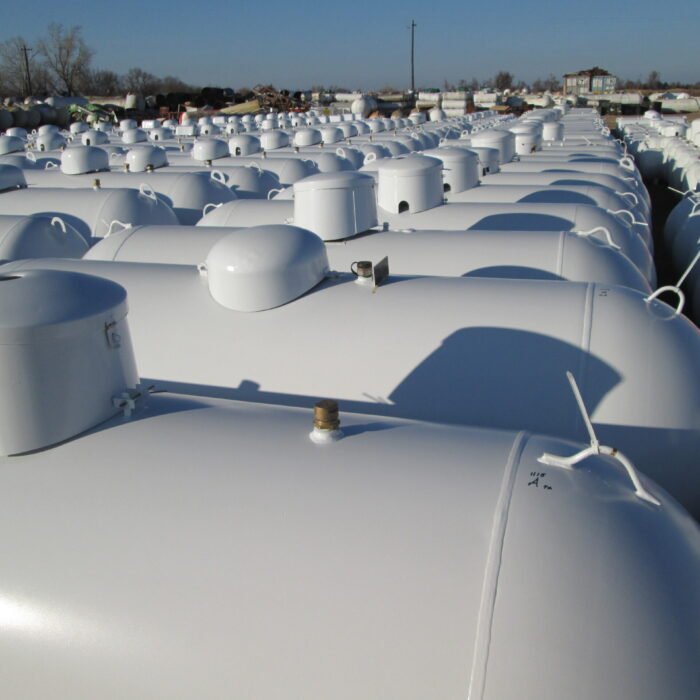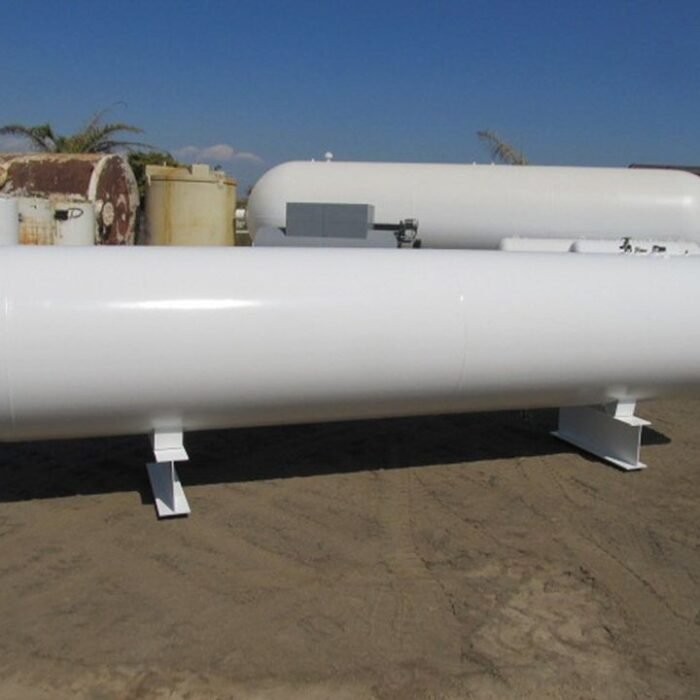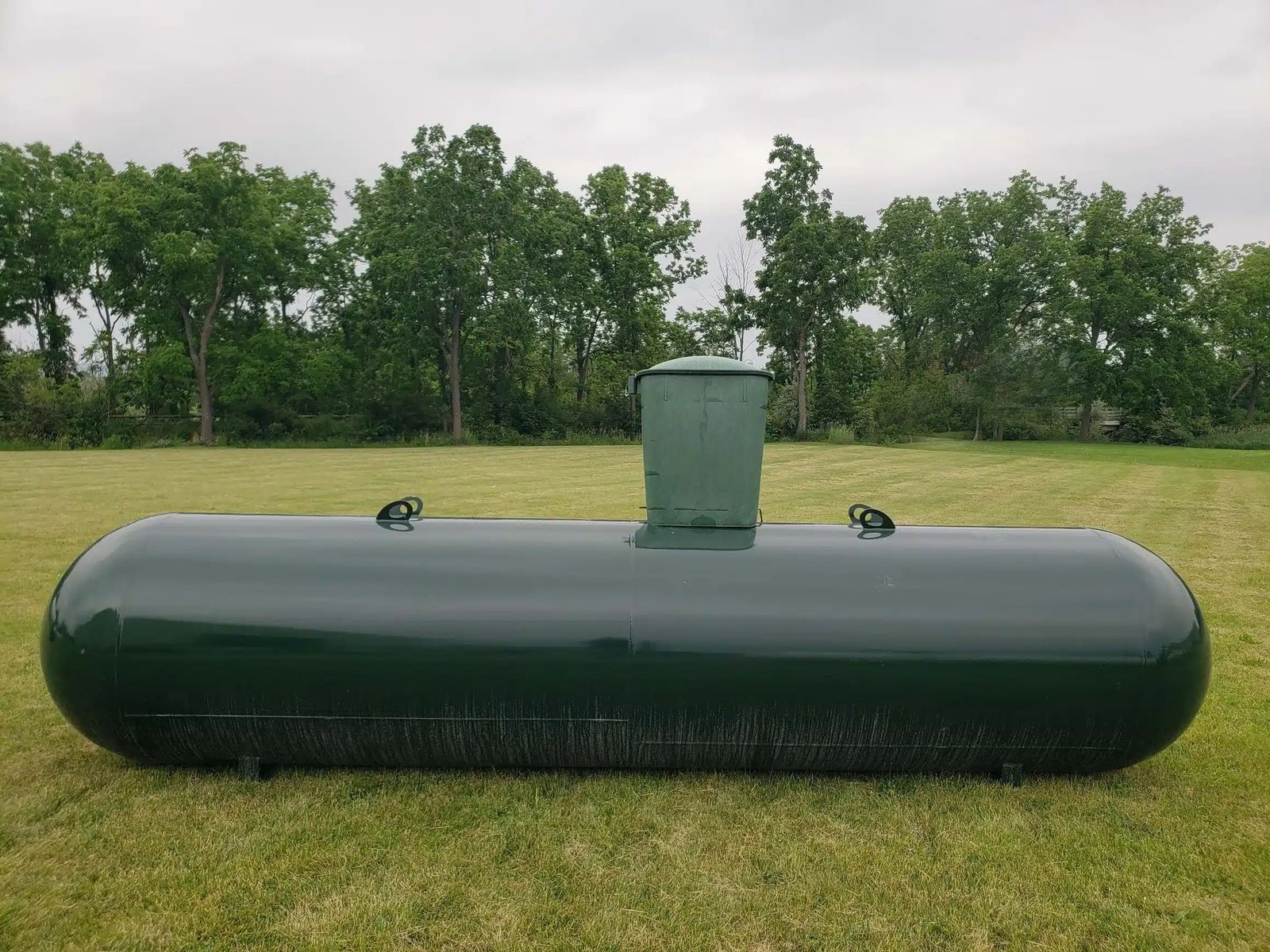
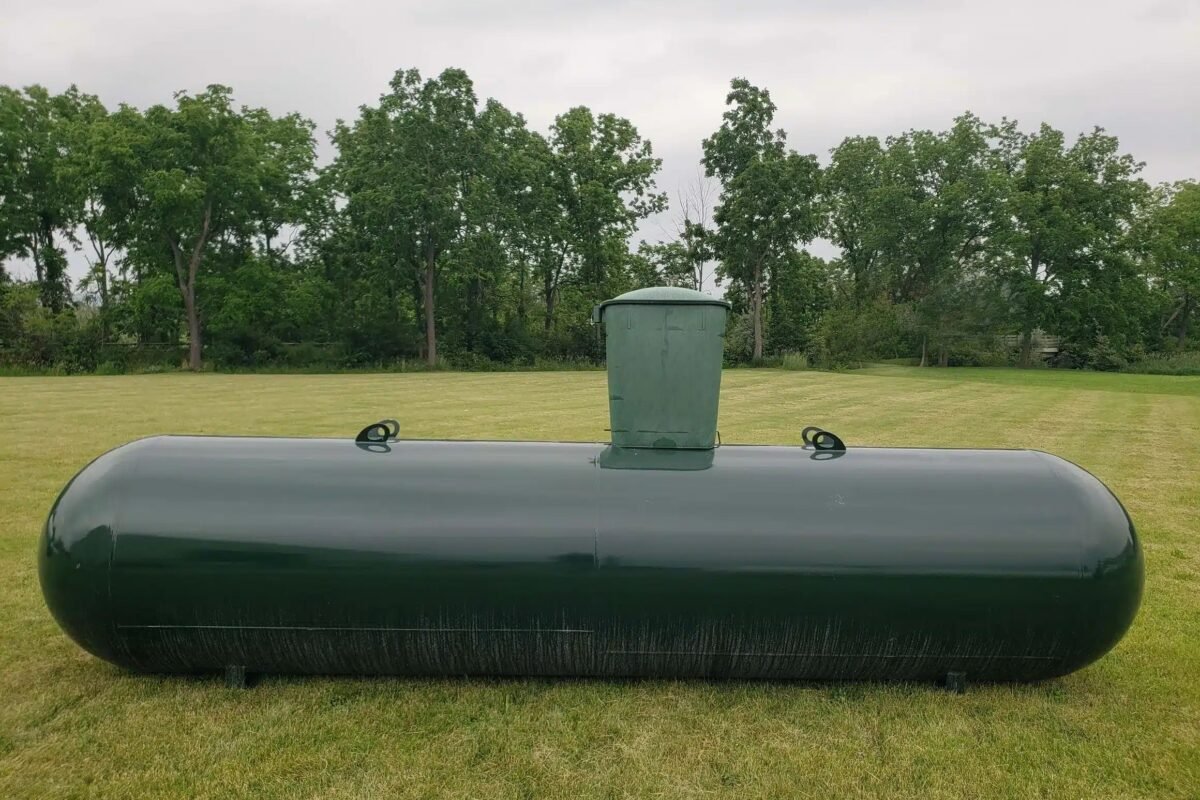
Description
This capacity is where domestic supply turns into something closer to a small bulk installation.
Specified for estates, farms, workshops and hospitality sites with a genuinely commercial gas demand.
Filled to the 80% limit this vessel holds about 800 gallons of propane — roughly 73 million BTU, or about 3,392 lb of product. Against a steady 100,000 BTU/hr load that is roughly 30 days of continuous running before it needs refilling.
In our range it sits between the 500 gallon and the 1,150 gallon. If the load is borderline, the 1,150 is the safer buy and the freight is the same either way.
Key specification
- Total capacity: 1,000 gallons
- Fillable volume: approximately 800 gallons
- Filled product weight: approximately 3,392 lb
- Energy content when full: approximately 73 million BTU
- Installation: Underground (buried)
- Certification: ASME stamped
- Condition: Confirmed on your invoice
- Fuel: Propane / LPG
Getting it on site
Buried installation keeps the vessel out of sight and off the usable footprint of the plot, which is usually why it is chosen over an above-ground tank of the same capacity. The trade-off is excavation, a dome and riser for access to the valves, and cathodic protection that has to be maintained.
Installation is a licensed trade. We will get the vessel to your site on an insured carrier; setting, connecting and commissioning it is work for a qualified propane contractor.
Condition and certification
Each unit is checked, tested and photographed before dispatch, so what arrives is provably the vessel that was inspected.
The gauge and the relief valve get particular attention — an unreadable gauge causes bad decisions and a tired relief valve causes worse ones.
Cost of ownership
Refill pricing rewards volume. A tank that takes a full delivery in one visit will always beat one that needs topping up twice.
Worth knowing before you buy
Order ahead of the season if you can. Everyone specifies propane storage in the first cold week, and that is the worst week to be waiting on freight.
Check your local clearances before ordering. Setback distances from buildings, boundaries and ignition sources are set by code and they decide where — and sometimes whether — a given capacity can go.