Description
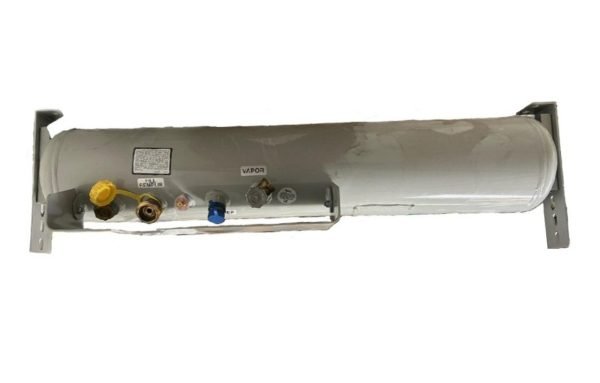
Compact cylinders earn their place where a permanent tank cannot go — balconies, trailers, kitchens and workshops.
Usual service is catering equipment, a workshop heater, or the gas supply on a mobile unit.
Filled to the 80% limit this vessel holds about 3 gallons of propane — roughly 0 million BTU, or about 13 lb of product. On a 30,000 BTU/hr appliance that is around 9 hours of burn time from a full fill.
The smallest capacity we list in this class. Anything more demanding moves you to the 24 gallon.
Key specification
- Water capacity: 4 gallons
- Working volume (80% fill): approximately 3 gallons
- Weight of propane when filled: approximately 13 lb
- Energy held when full: approximately 0 million BTU
- Installation: Portable cylinder
- Condition: Confirmed on your invoice
- Fuel: Propane / LPG
Getting it on site
Unlike a stationary vessel, a cylinder is designed to be taken to the gas rather than the other way round. That portability is the whole point, and it sets how it must be stored and carried.
Have a licensed propane professional lined up before the vessel arrives. Permits, setbacks and the commissioning test all sit with them, and scheduling is easier before the tank is on the ground.
What you receive
Every vessel is stamp-verified and pressure tested before dispatch, and the data plate photograph and test record travel with the invoice.
Fittings are verified before the vessel leaves the yard: relief valve condition, gauge operation, and clean threads on every connection.
Buying notes
Order ahead of the season if you can. Everyone specifies propane storage in the first cold week, and that is the worst week to be waiting on freight.
If you are between two capacities, go up. A tank that never drops below about 30% refills more cheaply per gallon and spends less of its life on the supplier’s emergency list.