Description
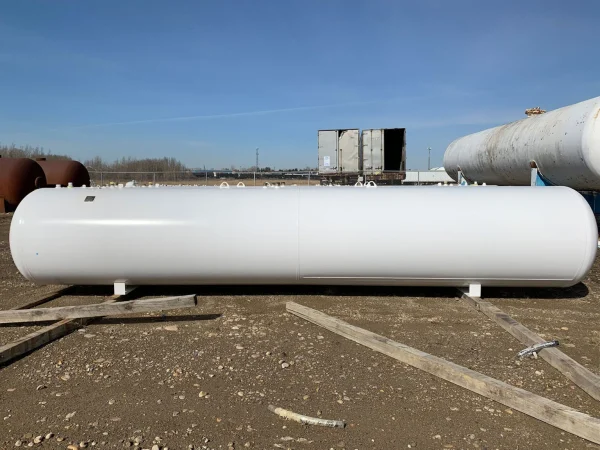
The standard domestic bulk tank. Heat, hot water, cooking and a dryer on one vessel, refilled a couple of times a year rather than monthly.
It runs the whole house, including the appliances people forget to count when they size a tank too small.
Filled to the 80% limit this vessel holds about 400 gallons of propane — roughly 37 million BTU, or about 1,696 lb of product. Against a steady 100,000 BTU/hr load that is roughly 15 days of continuous running before it needs refilling.
Against the 330 gallon it buys real headroom; against the 1,000 it saves footprint and pad. That trade-off is usually decided by the site, not the load.
Technical details
- Shell capacity: 500 gallons
- Fillable volume: approximately 400 gallons
- Mass of propane at full fill: approximately 1,696 lb
- Heat content at full fill: approximately 37 million BTU
- Installation: Above ground
- Certification: ASME stamped
- Condition: Certified used — inspected and pressure tested
- Fuel: Propane / LPG
Installation and siting
The simplest installation there is: a level base, correct clearances, and the tank goes down. No excavation, no cathodic protection, and any future work happens in daylight rather than in a hole.
We supply and deliver; we do not install. A propane vessel must be set and commissioned by a licensed propane professional under NFPA 58 and your local code.
Certification and paperwork
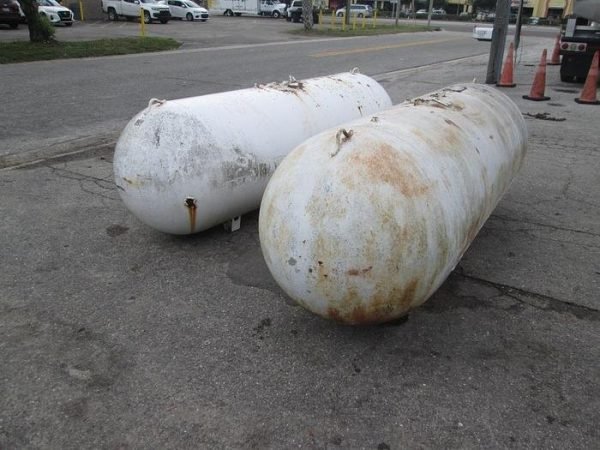
This is a certified used vessel. It carries a live stamp, it has passed a pressure test, and the data plate photograph and test paperwork go out with the invoice. What it does not do is look new — there will be surface marks, and we photograph them rather than shoot around them.
Service valve, fill valve, relief valve, float gauge and vapour connection are all checked before dispatch, and anything that does not pass is replaced rather than nursed along.
Running costs
A tank you own has no rental charge attached to it, and no clause tying you to one supplier’s posted price.
Before you commit
If you are between two capacities, go up. A tank that never drops below about 30% refills more cheaply per gallon and spends less of its life on the supplier’s emergency list.
Order ahead of the season if you can. Everyone specifies propane storage in the first cold week, and that is the worst week to be waiting on freight.