Description
The step where storage starts paying for itself in delivery economics rather than just in convenience.
It supports several heavy appliances at once, or a seasonal process load that would flatten a domestic tank.
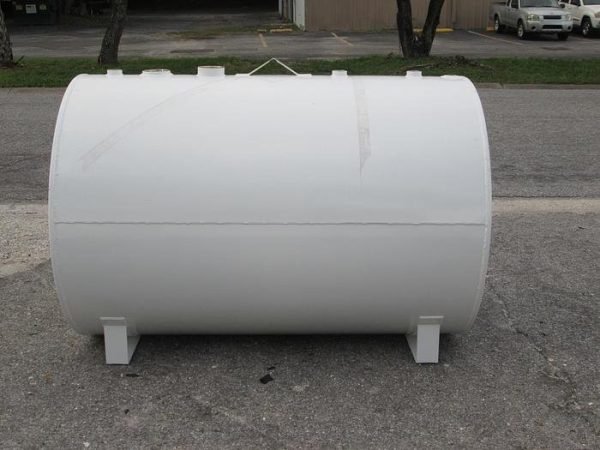
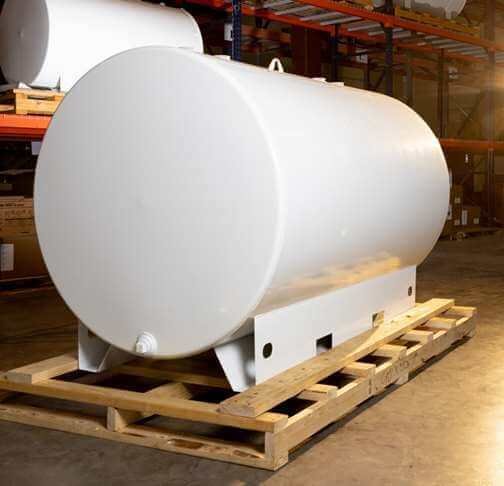
Filled to the 80% limit this vessel holds about 800 gallons of propane — roughly 73 million BTU, or about 3,392 lb of product. Against a steady 100,000 BTU/hr load that is roughly 30 days of continuous running before it needs refilling.
Against the 500 gallon it buys real headroom; against the 1,150 it saves footprint and pad. That trade-off is usually decided by the site, not the load.
Key specification
- Water capacity: 1,000 gallons
- Working volume (80% fill): approximately 800 gallons
- Filled product weight: approximately 3,392 lb
- Heat content at full fill: approximately 73 million BTU
- Installation: Above ground
- Certification: ASME stamped
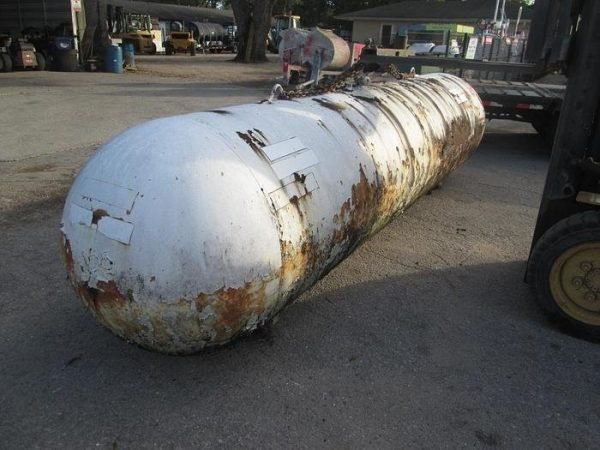
- Condition: Certified used — inspected and pressure tested
- Fuel: Propane / LPG
Siting notes
Surface installation keeps the whole vessel inspectable. Coating faults, valve seepage and gauge problems are all visible before they become expensive, which is the main argument for staying above ground where the site allows it.
Installation is a licensed trade. We will get the vessel to your site on an insured carrier; setting, connecting and commissioning it is work for a qualified propane contractor.
What you receive
Certified used: stamp verified, pressure tested, valves and fittings checked and replaced where they did not pass. The saving against new is real, and so is the paperwork that makes it a sound purchase.
Fittings are verified before the vessel leaves the yard: relief valve condition, gauge operation, and clean threads on every connection.
Running costs
Larger vessels are cheaper to fill per gallon because suppliers price on delivery efficiency. A part-load top-up costs more per gallon than a bulk fill, every time.
Buying notes
Size against the real load, not the optimistic one. A vessel one size too small costs more across ten years of refills than the larger one did on the day you bought it.
Check your local clearances before ordering. Setback distances from buildings, boundaries and ignition sources are set by code and they decide where — and sometimes whether — a given capacity can go.