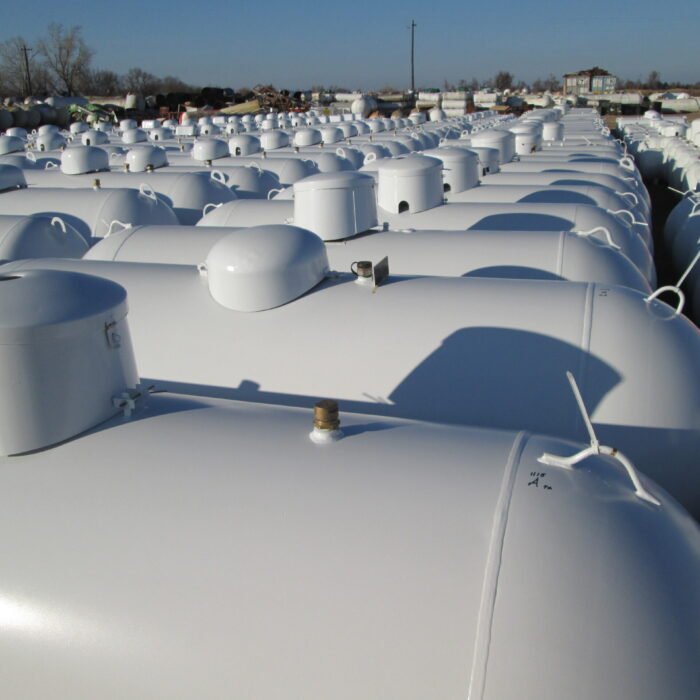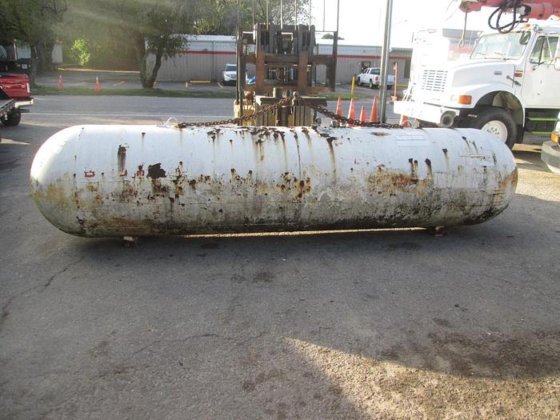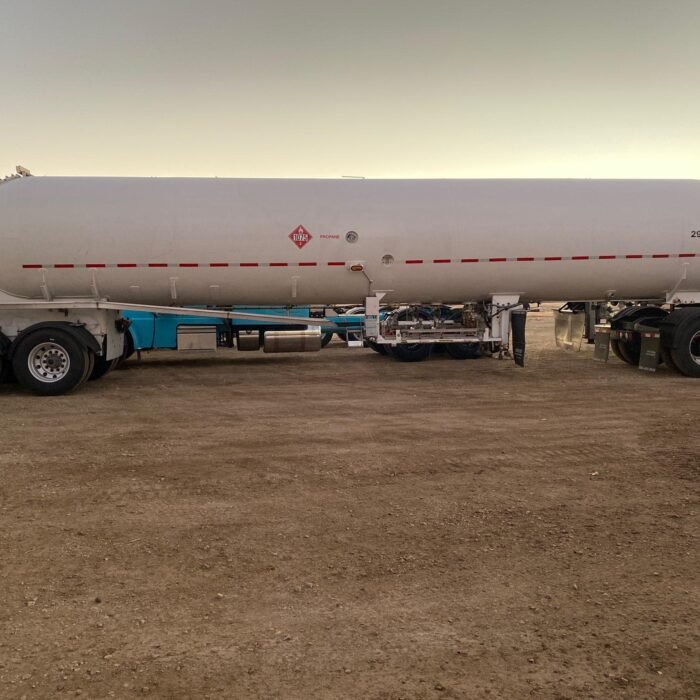
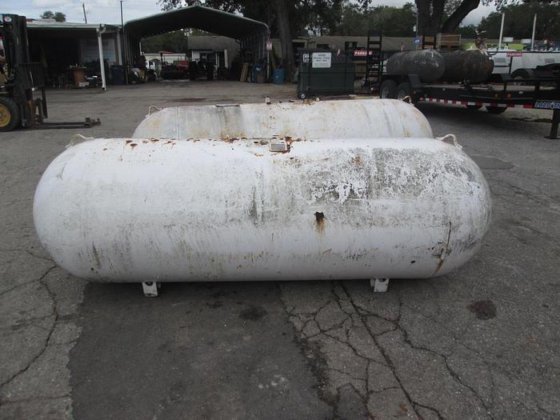
Description
The workhorse of domestic propane. Big enough to cover a full winter load, common enough that every installer knows how to set one.
Full domestic service — space heating, water heating and every gas appliance in the property.
Filled to the 80% limit this vessel holds about 400 gallons of propane — roughly 37 million BTU, or about 1,696 lb of product. Against a steady 100,000 BTU/hr load that is roughly 15 days of continuous running before it needs refilling.
Against the 330 gallon it buys real headroom; against the 1,000 it saves footprint and pad. That trade-off is usually decided by the site, not the load.
Specification
- Total capacity: 500 gallons
- Fillable volume: approximately 400 gallons
- Product weight when full: approximately 1,696 lb
- Stored energy when full: approximately 37 million BTU
- Installation: Above ground
- Certification: ASME stamped
- Condition: Certified used — inspected and pressure tested
- Fuel: Propane / LPG
Siting and installation
Set on a prepared pad, an above-ground vessel is the cheapest to install and by a distance the easiest to service. The gauge is readable from the ground and a technician can reach every fitting without lifting anything.
We supply and deliver; we do not install. A propane vessel must be set and commissioned by a licensed propane professional under NFPA 58 and your local code.
Condition and documentation
Pre-owned and fully documented. The pressure test is what matters on a used tank, and the record for this specific vessel is sent with your invoice rather than promised later.
Valves and fittings are inspected as a set. A vessel goes out with a working gauge and a relief valve in date, or it does not go out.
Cost of ownership
Running a tank down to the reserve costs money twice: emergency delivery rates, and the risk of an interruption at the worst possible time.
Before you commit
Have the appliance ratings to hand when you call. Total BTU and the climate decide the capacity; everything else is siting.
Buy the documentation, not just the steel. A vessel without a legible stamp and a test record is worth a fraction of one with both, whatever the listing says.