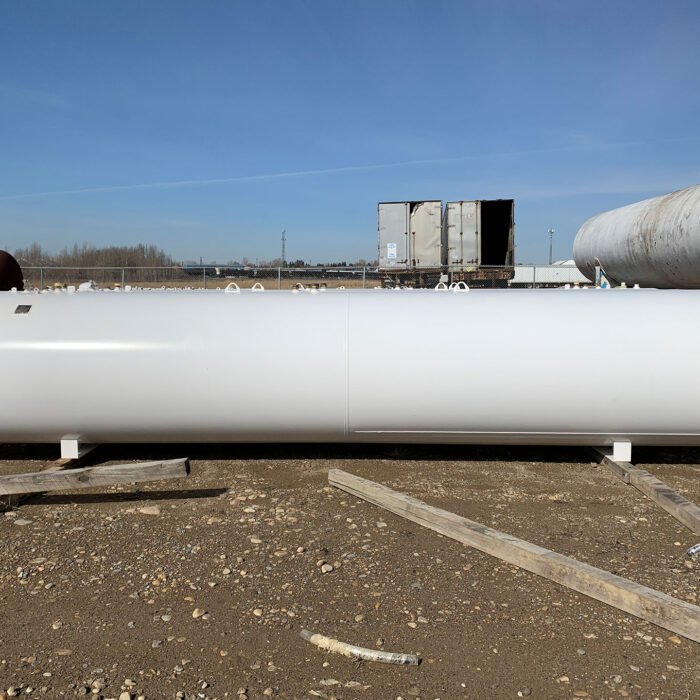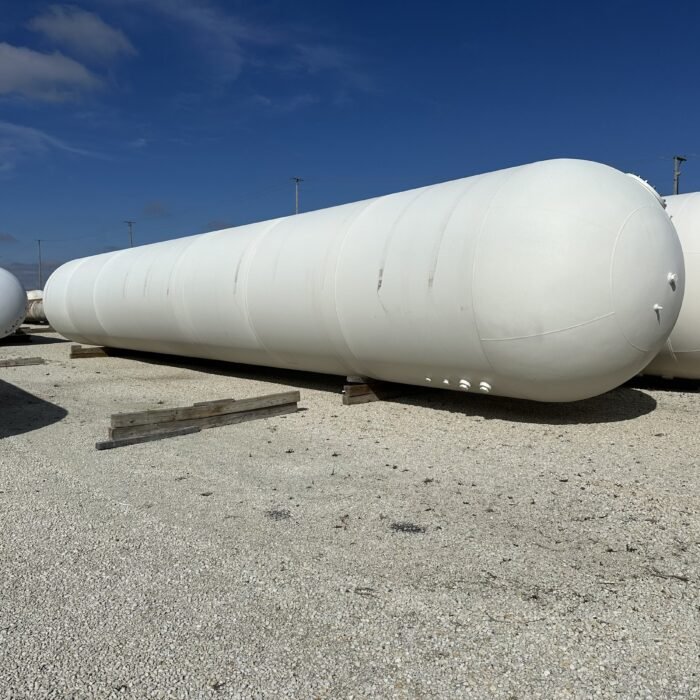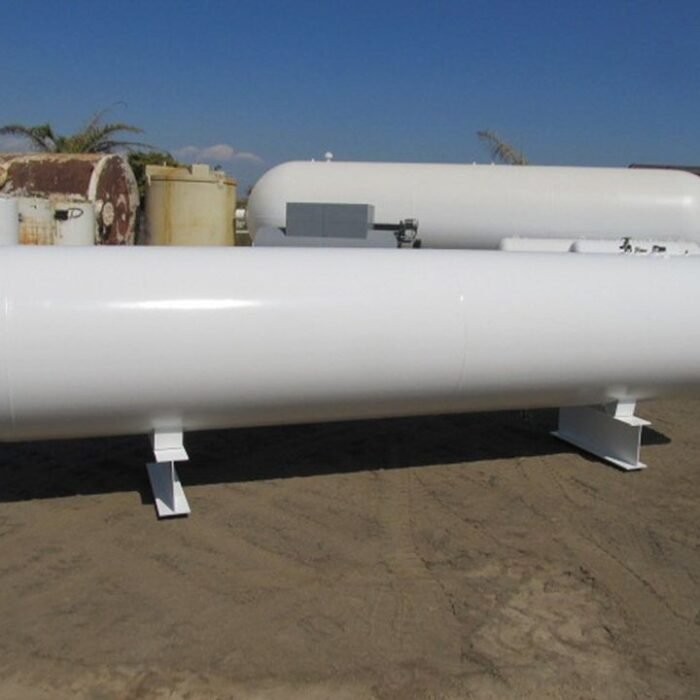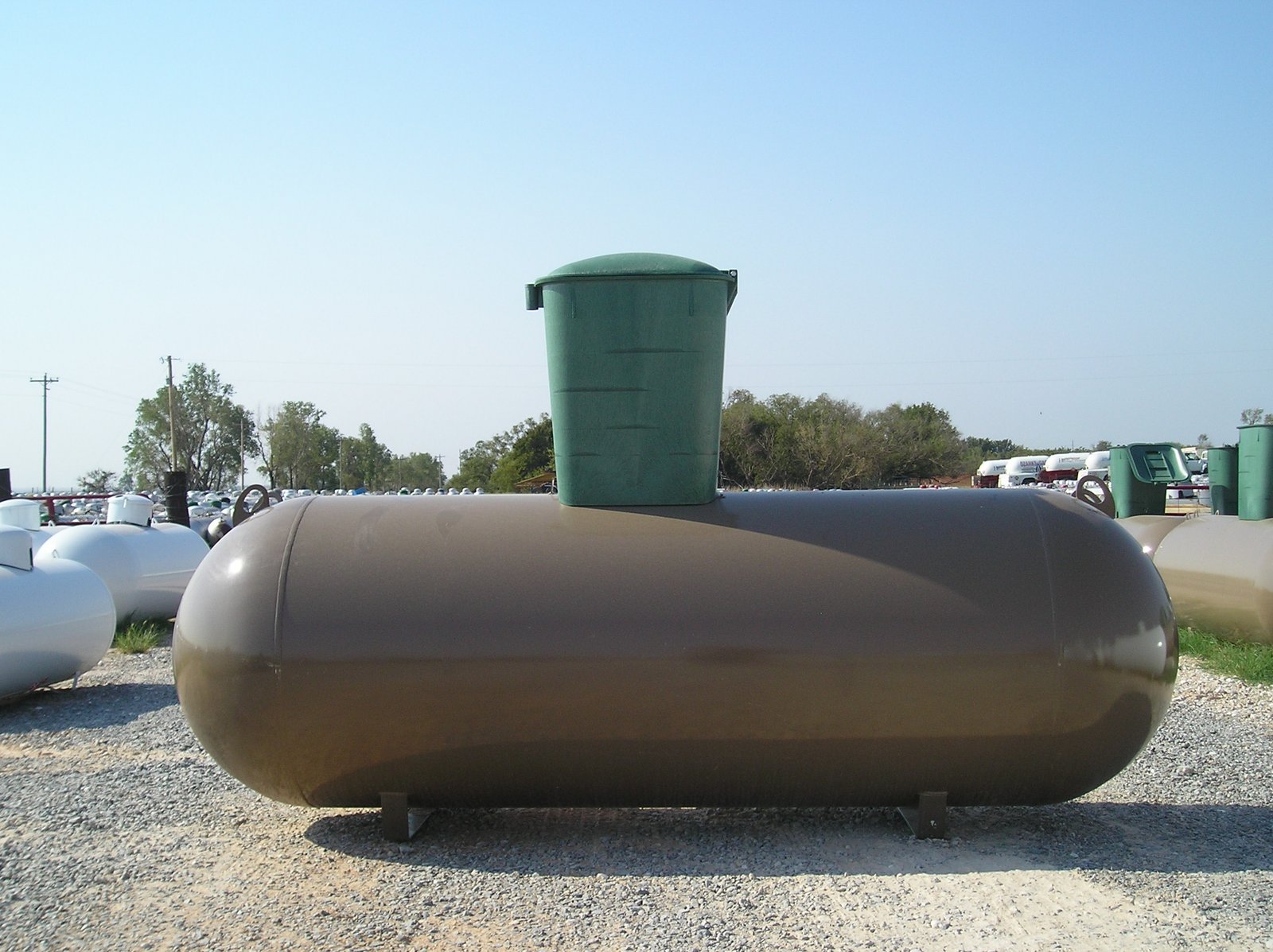
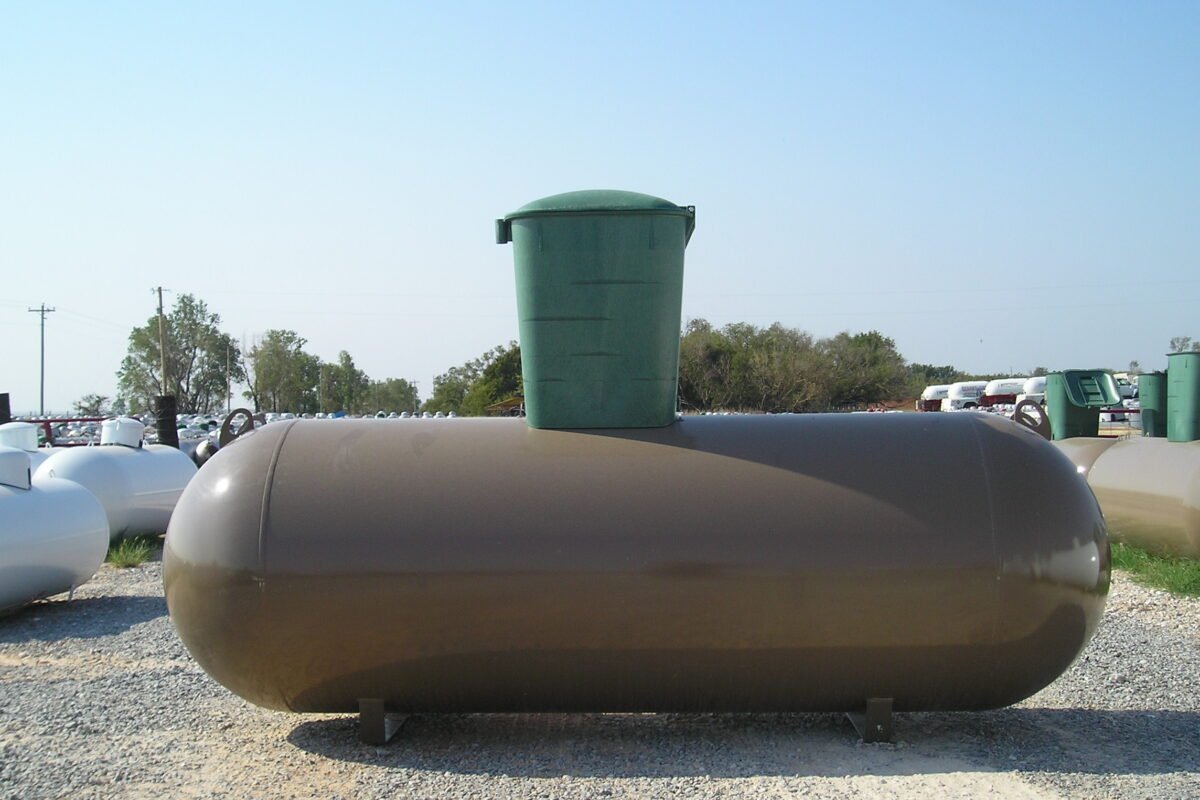
Description
Enough storage to ride out a delivery delay, compact enough to site against a boundary without a planning conversation.
Good for a compact heating system plus domestic hot water, with headroom for cooking.
Filled to the 80% limit this vessel holds about 200 gallons of propane — roughly 18 million BTU, or about 848 lb of product. Against a steady 100,000 BTU/hr load that is roughly 8 days of continuous running before it needs refilling.
The next size down is 200 gallons and the next up is 320. Stepping up costs less than most people assume once freight is counted only once.
Specification
- Shell capacity: 250 gallons
- Fillable volume: approximately 200 gallons
- Product weight when full: approximately 848 lb
- Energy content when full: approximately 18 million BTU
- Installation: Underground (buried)
- Certification: ASME and DOT stamped
- Condition: Confirmed on your invoice
- Fuel: Propane / LPG
Siting and installation
The reason to bury a tank is almost always the site rather than the tank: setback distances, sightlines, or a plot that cannot give up the space. Done properly, a buried vessel outlasts a surface one because it never sees UV or frost.
Installation is a licensed trade. We will get the vessel to your site on an insured carrier; setting, connecting and commissioning it is work for a qualified propane contractor.
What you receive
We verify the stamp and pressure test the vessel before it leaves the yard, and the paperwork for your exact unit goes out with the order.
We check the relief valve, the service and fill connections and the float gauge on every unit. These are the parts that fail first and the parts that matter most.
The economics
Capacity is cheap compared with delivery. The incremental cost of the next size up is usually recovered within a few heating seasons.
Worth knowing before you buy
Have the appliance ratings to hand when you call. Total BTU and the climate decide the capacity; everything else is siting.
Ask what the regulator and first-stage arrangement will be. The tank is only half the specification, and the wrong regulator will starve appliances the vessel could easily supply.