Description
Bulk capacity turns propane from a delivered consumable into an inventory the site controls.
This capacity supports continuous industrial load, agricultural drying, or a site with several buildings on one supply.
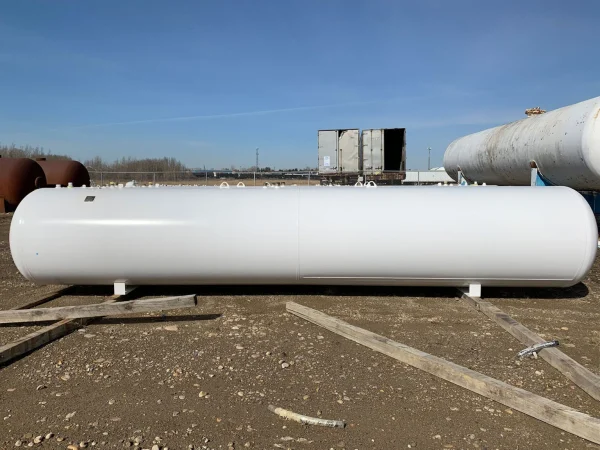
Filled to the 80% limit this vessel holds about 1,600 gallons of propane — roughly 146 million BTU, or about 6,784 lb of product. Against a steady 100,000 BTU/hr load that is roughly 61 days of continuous running before it needs refilling.
Against the 1,500 gallon it buys real headroom; against the 2,500 it saves footprint and pad. That trade-off is usually decided by the site, not the load.
Key specification
- Shell capacity: 2,000 gallons
- Working volume (80% fill): approximately 1,600 gallons
- Mass of propane at full fill: approximately 6,784 lb
- Energy held when full: approximately 146 million BTU
- Installation: Above ground
- Certification: ASME stamped
- Condition: Confirmed on your invoice
- Fuel: Propane / LPG
Getting it on site
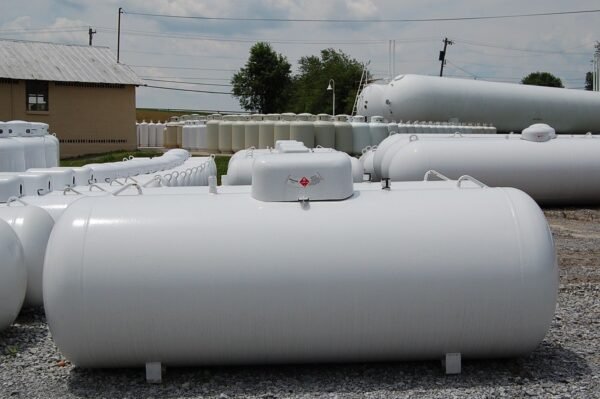
Set on a prepared pad, an above-ground vessel is the cheapest to install and by a distance the easiest to service. The gauge is readable from the ground and a technician can reach every fitting without lifting anything.
We supply and deliver; we do not install. A propane vessel must be set and commissioned by a licensed propane professional under NFPA 58 and your local code.
Condition and certification
The exact condition and specification are confirmed in writing before you pay, along with the test record for the vessel itself.
Fittings are verified before the vessel leaves the yard: relief valve condition, gauge operation, and clean threads on every connection.
The economics
Buying propane in summer and storing it through winter is the oldest saving in this trade, and it only works if the vessel is big enough to be worth filling.
Before you commit
Check your local clearances before ordering. Setback distances from buildings, boundaries and ignition sources are set by code and they decide where — and sometimes whether — a given capacity can go.
Have the appliance ratings to hand when you call. Total BTU and the climate decide the capacity; everything else is siting.