Description
At this size the tank stops being a household fixture and starts being infrastructure, with the delivery economics that come with it.
Loads at this size are usually multiple heaters, a commercial kitchen, or agricultural drying plant.
Filled to the 80% limit this vessel holds about 800 gallons of propane — roughly 73 million BTU, or about 3,392 lb of product. Against a steady 100,000 BTU/hr load that is roughly 30 days of continuous running before it needs refilling.
In our range it sits between the 500 gallon and the 1,150 gallon. If the load is borderline, the 1,150 is the safer buy and the freight is the same either way.
Technical details
- Shell capacity: 1,000 gallons
- Working volume (80% fill): approximately 800 gallons
- Weight of propane when filled: approximately 3,392 lb
- Stored energy when full: approximately 73 million BTU
- Installation: Underground (buried)
- Certification: ASME stamped
- Condition: New
- Fuel: Propane / LPG
Siting notes
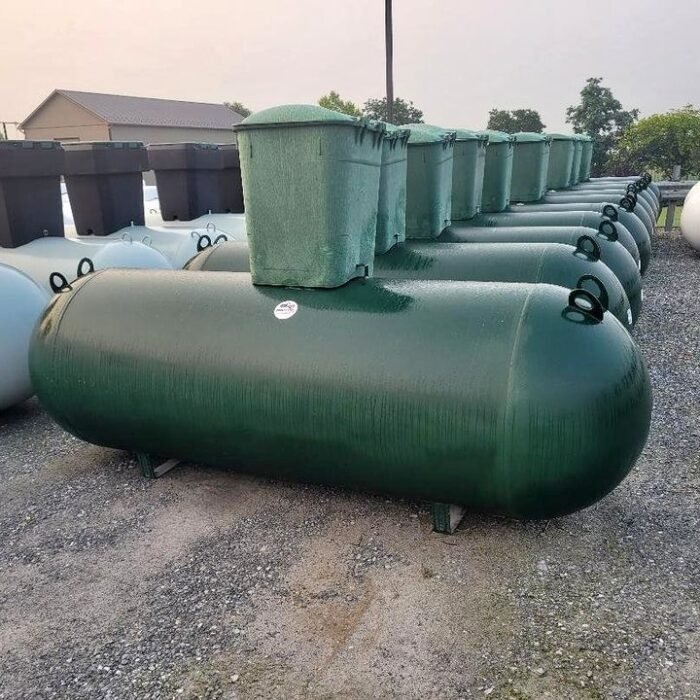
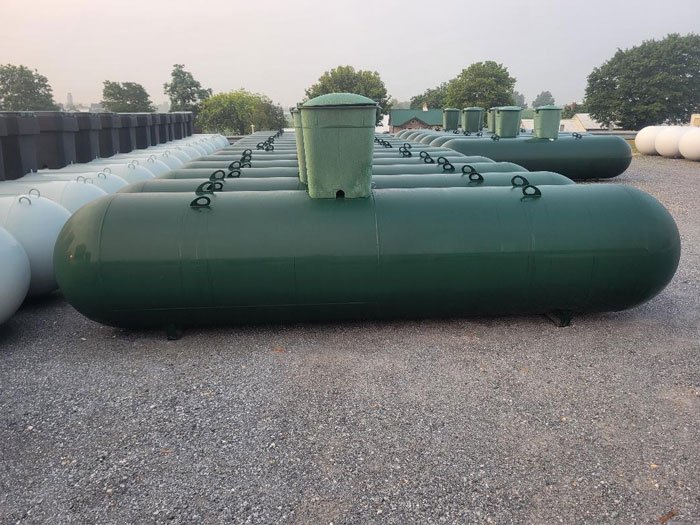
Going underground buys back the yard. The vessel is supplied coated for burial, with a riser bringing the service valves and gauge up to a dome at ground level, and a magnesium anode bag protecting the shell against soil corrosion.
Have a licensed propane professional lined up before the vessel arrives. Permits, setbacks and the commissioning test all sit with them, and scheduling is easier before the tank is on the ground.
Certification and paperwork
New and uncommissioned, supplied with the manufacturer’s warranty and the complete certification record.
The gauge and the relief valve get particular attention — an unreadable gauge causes bad decisions and a tired relief valve causes worse ones.
Running costs
Larger vessels are cheaper to fill per gallon because suppliers price on delivery efficiency. A part-load top-up costs more per gallon than a bulk fill, every time.
Worth knowing before you buy
Tell us the delivery ZIP when you enquire and we will quote the tank and the freight in the same reply, including any access surcharge — not after you have paid.
Size against the real load, not the optimistic one. A vessel one size too small costs more across ten years of refills than the larger one did on the day you bought it.