Description
Plant infrastructure rather than site equipment. Specification starts with throughput and works back to the vessel.
The load behind a vessel like this is usually a bulk plant, a distribution operation or a continuous industrial burner.
Filled to the 80% limit this vessel holds about 24,000 gallons of propane — roughly 2,196 million BTU, or about 101,760 lb of product. Against a steady 100,000 BTU/hr load that is roughly 915 days of continuous running before it needs refilling.
At 30,000 gallons this is the largest capacity we list, and specification at this end is a conversation rather than a catalogue choice.
Key specification
- Shell capacity: 30,000 gallons
- Working volume (80% fill): approximately 24,000 gallons
- Product weight when full: approximately 101,760 lb
- Energy held when full: approximately 2,196 million BTU
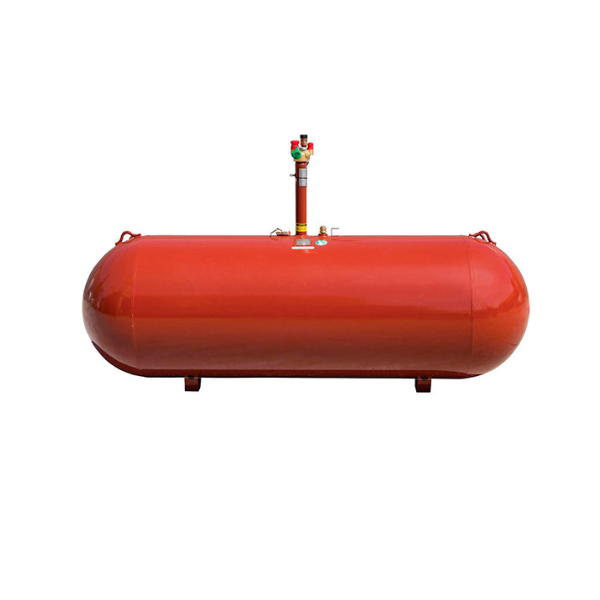
- Installation: Skid mounted
- Certification: ASME stamped
- Condition: Confirmed on your invoice
- Fuel: Propane / LPG
Getting it on site
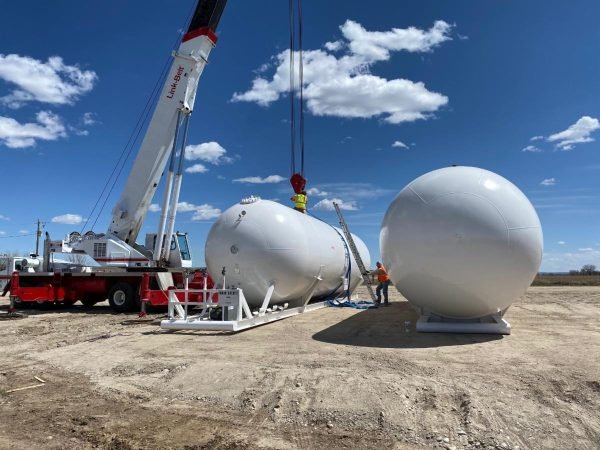
The skid frame carries the vessel and its fittings as a single lift. That matters on sites where a permanent foundation is not wanted, or where the storage has to follow the work.
Have a licensed propane professional lined up before the vessel arrives. Permits, setbacks and the commissioning test all sit with them, and scheduling is easier before the tank is on the ground.
What you receive
The exact condition and specification are confirmed in writing before you pay, along with the test record for the vessel itself.
Service valve, fill valve, relief valve, float gauge and vapour connection are all checked before dispatch, and anything that does not pass is replaced rather than nursed along.
Running costs
Owning the tank rather than leasing it means you choose the supplier. That single change is usually worth more over five years than the difference in purchase price between capacities.
Before you commit
Tell us the delivery ZIP when you enquire and we will quote the tank and the freight in the same reply, including any access surcharge — not after you have paid.
If you are between two capacities, go up. A tank that never drops below about 30% refills more cheaply per gallon and spends less of its life on the supplier’s emergency list.