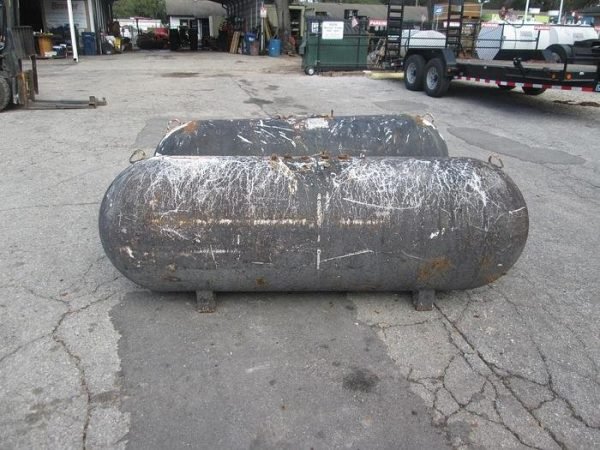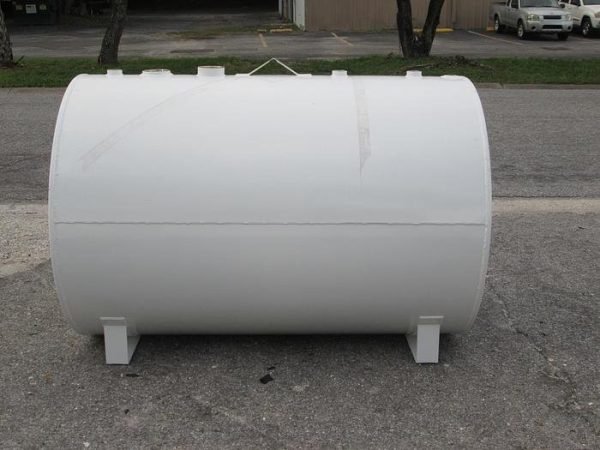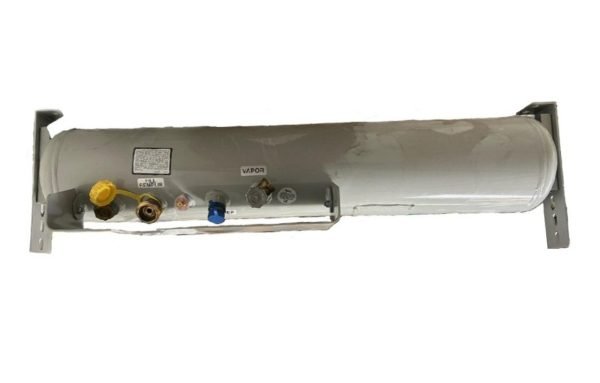
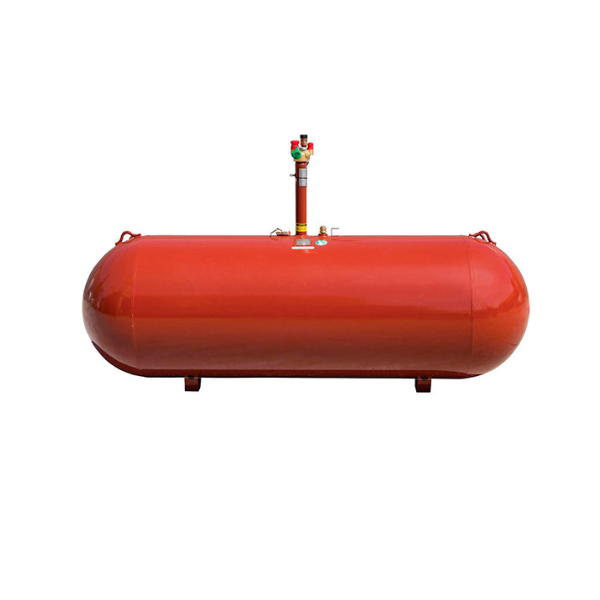
Description
This capacity is where domestic supply turns into something closer to a small bulk installation.
Loads at this size are usually multiple heaters, a commercial kitchen, or agricultural drying plant.
Filled to the 80% limit this vessel holds about 800 gallons of propane — roughly 73 million BTU, or about 3,392 lb of product. Against a steady 100,000 BTU/hr load that is roughly 30 days of continuous running before it needs refilling.
The next size down is 500 gallons and the next up is 1,150. Stepping up costs less than most people assume once freight is counted only once.
Specification
- Rated water capacity: 1,000 gallons
- Working volume (80% fill): approximately 800 gallons
- Filled product weight: approximately 3,392 lb
- Heat content at full fill: approximately 73 million BTU
- Installation: Underground (buried)
- Certification: ASME stamped
- Condition: Confirmed on your invoice
- Fuel: Propane / LPG
Getting it on site
Burial protects the vessel from weather and impact and removes it from view entirely. In exchange it demands proper bedding material, a clean coating, an anode bag and a dome that stays accessible for gauge readings and refills.
Our responsibility ends at the delivery; a licensed propane contractor takes it from there. Codes on siting, clearances and commissioning are not optional and not ours to sign off.
What you receive
Every vessel is stamp-verified and pressure tested before dispatch, and the data plate photograph and test record travel with the invoice.
All connections are inspected and protected for transit, so the installing contractor starts with clean threads and a working gauge.
Running costs
A tank you own has no rental charge attached to it, and no clause tying you to one supplier’s posted price.
Before you commit
Think about the delivery vehicle as well as the tank. A site a bulk truck cannot reach turns a cheap refill into an expensive one for the rest of the tank’s life.
Ask what the regulator and first-stage arrangement will be. The tank is only half the specification, and the wrong regulator will starve appliances the vessel could easily supply.