Description
Specified for large homes, farms, workshops and commercial kitchens — anywhere a smaller tank would be back on the refill schedule every month.
Loads at this size are usually multiple heaters, a commercial kitchen, or agricultural drying plant.
Filled to the 80% limit this vessel holds about 800 gallons of propane — roughly 73 million BTU, or about 3,392 lb of product. Against a steady 100,000 BTU/hr load that is roughly 30 days of continuous running before it needs refilling.
Against the 500 gallon it buys real headroom; against the 1,150 it saves footprint and pad. That trade-off is usually decided by the site, not the load.
Specification
- Water capacity: 1,000 gallons
- Working volume (80% fill): approximately 800 gallons
- Weight of propane when filled: approximately 3,392 lb
- Energy content when full: approximately 73 million BTU
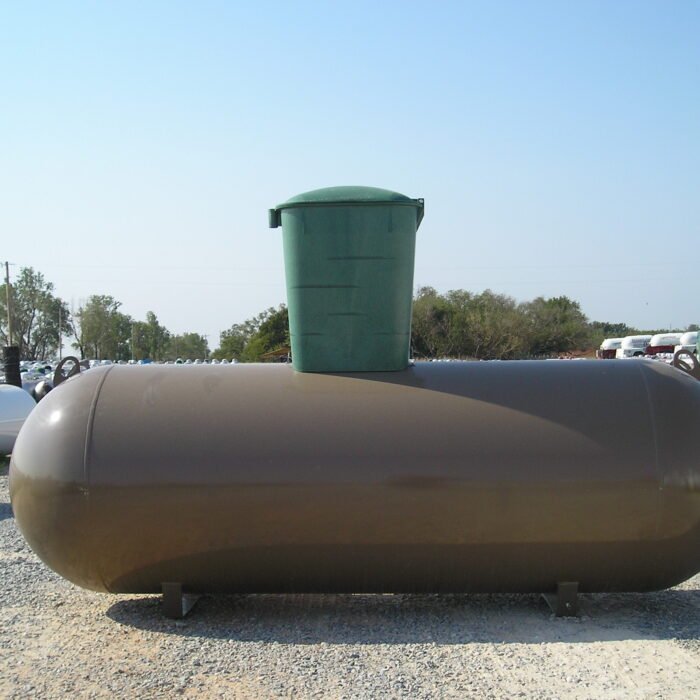
- Installation: Underground (buried)
- Certification: ASME stamped
- Condition: Confirmed on your invoice
- Fuel: Propane / LPG
Getting it on site
Buried installation keeps the vessel out of sight and off the usable footprint of the plot, which is usually why it is chosen over an above-ground tank of the same capacity. The trade-off is excavation, a dome and riser for access to the valves, and cathodic protection that has to be maintained.
Setting and commissioning must be done by a licensed propane professional in line with NFPA 58 and local code. Ask us if you need a name in your area.
Condition and certification
Whether new or certified used, nothing ships without a live stamp, a passed pressure test and the documentation to prove both.
We check the relief valve, the service and fill connections and the float gauge on every unit. These are the parts that fail first and the parts that matter most.
The economics
Owning the tank rather than leasing it means you choose the supplier. That single change is usually worth more over five years than the difference in purchase price between capacities.
Before you commit
Size against the real load, not the optimistic one. A vessel one size too small costs more across ten years of refills than the larger one did on the day you bought it.
Have the appliance ratings to hand when you call. Total BTU and the climate decide the capacity; everything else is siting.